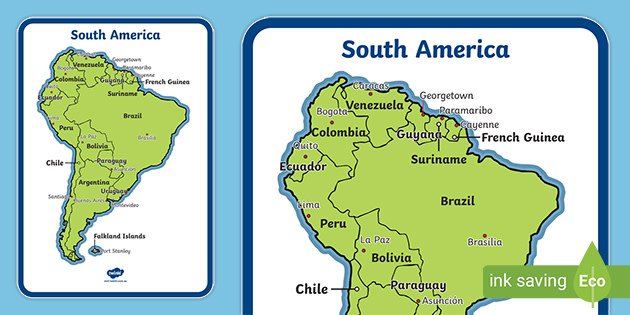

Planning a trip across South America can feel like stepping into a world of endless possibilities. From the snow-capped Andes to lush rainforests and vibrant coastal cities, the continent offers so much that it’s easy to get overwhelmed. That’s where something as simple as a South America map becomes surprisingly powerful.
At first glance, a map might seem like a basic tool. But once you start using it properly, it becomes your travel companion, your strategic planner, and even your inspiration board. Whether you’re backpacking through multiple countries or organizing a short vacation, a well-used South America map can completely reshape how you plan your journey.
Why a South America Map Matters More Than You Think
Before diving into the practical benefits, it’s worth understanding why a South America map is so essential in the first place.
South America is vast. We’re talking about diverse climates, varying terrains, and cultures that shift dramatically from one border to another. Without a clear visual overview, it’s easy to underestimate distances, overlook hidden destinations, or misjudge travel time.
A map doesn’t just show you where things are—it shows you how everything connects.
Helps You Understand Geography and Distance Clearly
One of the biggest mistakes travelers make is underestimating how large South America really is.
A South America map immediately puts things into perspective. You begin to see:
- The vast stretch of Brazil
- The narrow spine of Chile along the Pacific coast
- The high-altitude regions of Bolivia and Peru
- The distance between major cities like Buenos Aires and Lima
Why This Matters
Without this visual context, it’s easy to plan unrealistic itineraries. For example, traveling from Colombia to Argentina isn’t a quick hop—it requires careful planning, possibly flights, and time adjustments.
A map helps you:
- Estimate travel time more accurately
- Avoid overpacking your itinerary
- Plan logical travel routes
Makes Route Planning Smarter and More Efficient
A South America map allows you to design travel routes that actually make sense.
Instead of jumping randomly between countries, you can create a smooth path. For instance:
- Start in Ecuador
- Move south through Peru
- Continue into Bolivia
- End in Chile or Argentina
This kind of flow reduces travel fatigue and saves money on transportation.
Key Route Planning Benefits
- Minimizes backtracking
- Helps identify border crossings
- Aligns with regional transport options
- Supports both road trips and backpacking routes
Moreover, if you’re planning a multi-country adventure, a map becomes essential for seeing how neighboring countries connect.
Reveals Hidden Gems and Lesser-Known Destinations
Guidebooks often focus on popular spots, but a South America map opens your eyes to places you might never have considered.
When you scan a map, you start noticing:
- Small towns near famous landmarks
- Remote national parks
- Coastal villages off the main tourist trail
- Regions with unique ecosystems
Example
While everyone talks about Machu Picchu, a closer look at a map might lead you to explore the Sacred Valley, lesser-known hiking routes, or nearby cultural towns.
This kind of discovery adds depth to your trip and helps you avoid overcrowded destinations.
Improves Budget Planning and Cost Awareness
Travel costs in South America vary significantly depending on the country and region.
A South America map helps you visualize where you’ll be spending time—and that directly affects your budget.
Budget Insights You Gain
- Some countries are more affordable than others
- Transportation costs increase with distance
- Remote areas may have limited and expensive services
By mapping out your journey, you can:
- Allocate your budget more effectively
- Balance expensive cities with cheaper destinations
- Avoid unexpected costs
For instance, spending more time in budget-friendly regions like Bolivia can offset higher costs in Chile.
Enhances Cultural Understanding and Travel Experience
A South America map doesn’t just show geography—it reveals cultural diversity.
Each region has its own identity, language variations, cuisine, and traditions. When you study a map, you begin to understand:
- Indigenous regions vs urban centers
- Spanish-speaking vs Portuguese-speaking areas
- Cultural influences based on geography
Why This Enriches Your Trip
You’re not just visiting places—you’re experiencing cultures more intentionally.
For example:
- Coastal areas often have seafood-rich cuisine
- Mountain regions have distinct traditions and festivals
- Jungle regions offer entirely different lifestyles
This awareness allows you to plan experiences that align with your interests.
Supports Adventure and Activity Planning
If you’re planning activities like hiking, trekking, surfing, or wildlife exploration, a South America map becomes incredibly valuable.
Activity-Based Planning
With a map, you can easily locate:
- Mountain ranges like the Andes
- Rainforests such as the Amazon basin
- Beaches along the Pacific and Atlantic coasts
- Desert regions like Atacama
This makes it easier to group activities logically.
Example Itinerary Based on Map Insights
- Trekking in Peru
- Salt flats exploration in Bolivia
- Desert adventures in Chile
- Wine tours in Argentina
Instead of scattered planning, your itinerary becomes cohesive and purposeful.
Reduces Travel Stress and Boosts Confidence
Perhaps the most underrated benefit of using a South America map is the confidence it brings.
Traveling in unfamiliar regions can feel intimidating. But when you’ve studied your route and understand your surroundings, everything feels more manageable.
How It Helps Mentally
- You feel more prepared
- You make quicker decisions
- You adapt better to changes
Even if plans shift—which they often do—you’ll have a clear mental picture of your options.
Types of South America Maps You Should Use
Not all maps are the same. To get the most out of your travel planning, consider using a mix of different map types.
Physical Maps
- Show terrain, mountains, rivers
- Ideal for understanding landscapes
Political Maps
- Highlight countries and borders
- Useful for visa and entry planning
Digital Maps
- Offer real-time navigation
- Help with directions and local exploration
Travel Maps
- Focus on tourist attractions
- Include landmarks and points of interest
Using a combination ensures a well-rounded travel strategy.
Key Elements to Look for in a Good South America Map
When choosing a South America map, don’t just pick the first one you see. Look for features that actually help with planning.
Essential Features
- Clear country borders
- Major cities and capitals
- Transportation routes
- Natural landmarks
- Scale for distance estimation
A high-quality map can make all the difference between confusion and clarity.
Practical Tips for Using a South America Map Effectively
Having a map is one thing—using it well is another.
Smart Map Usage Tips
- Mark your planned destinations
- Highlight travel routes
- Note estimated travel times
- Identify backup options
- Keep both digital and offline versions
In addition, revisit your map regularly as your plans evolve.
Common Travel Planning Mistakes a Map Helps Avoid
Without a South America map, travelers often fall into common traps.
Mistakes to Watch Out For
- Overloading the itinerary
- Ignoring travel distances
- Missing nearby attractions
- Poor route sequencing
- Underestimating transport time
A map acts like a reality check, keeping your plans grounded and practical.
How a South America Map Inspires Your Journey
Interestingly, one of the best things about a South America map is how it sparks imagination.
You might start with a simple plan, but as you explore the map, new ideas emerge:
- “What if I visit that national park?”
- “That coastal route looks amazing.”
- “Maybe I should add another country.”
This creative aspect turns planning into an exciting part of the journey itself.
Conclusion: Turn Your Travel Dreams into a Clear Plan
A great trip doesn’t start with booking flights—it starts with understanding where you’re going. And nothing does that better than a South America map.
From smarter route planning to uncovering hidden gems, improving your budget, and boosting confidence, a map transforms how you approach travel. It turns confusion into clarity and scattered ideas into a structured adventure.
If you’re serious about making the most of your journey, don’t skip this step. Spend time with a South America map, explore it, mark it, and let it guide your plans.
Now it’s your turn—how do you use a map when planning your trips? Share your thoughts, experiences, or tips and keep the conversation going.