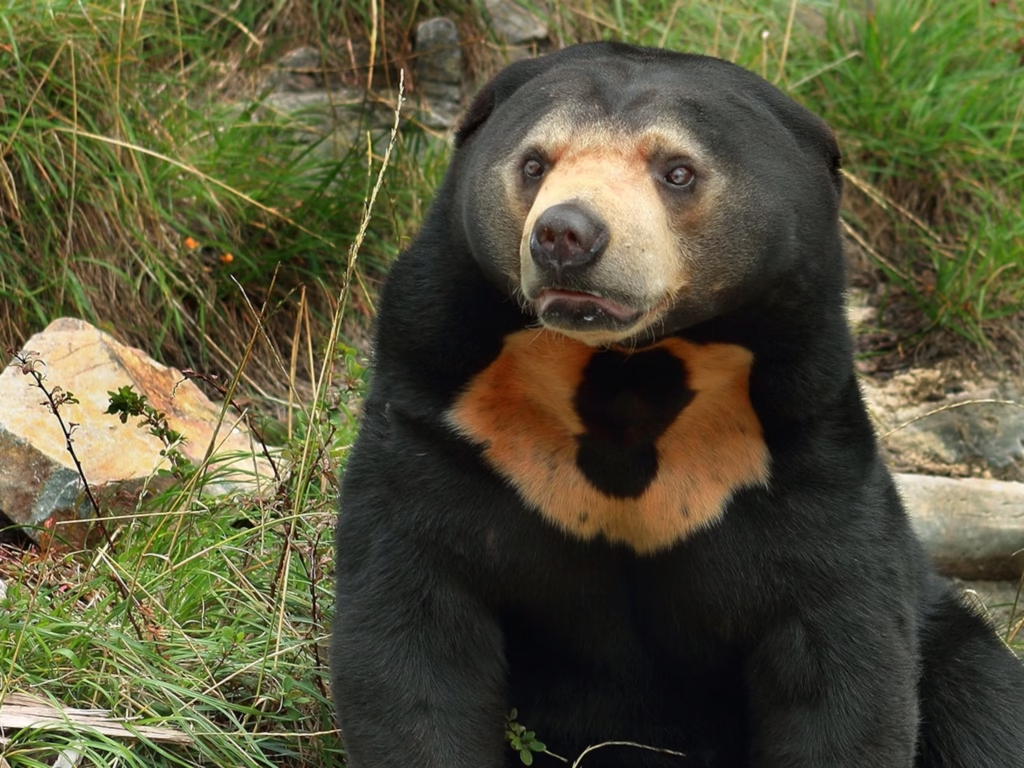

When people think of bears, they usually imagine giant grizzlies roaming through forests or polar bears walking across Arctic ice. However, hidden deep inside the tropical rainforests of Southeast Asia lives a much smaller and lesser-known species that deserves just as much attention. The sun bear is one of the most fascinating animals on Earth, yet many people have never even heard of it.
With its unusual appearance, playful behavior, and incredible climbing abilities, the sun bear feels almost mythical. It has a golden patch on its chest that resembles a rising sun, a tongue longer than you’d expect, and paws strong enough to tear apart tree trunks. Despite its adorable face, this animal is also incredibly tough and perfectly adapted for life in dense jungles.
In this article, you’ll discover seven incredible facts about the sun bear, along with surprising details about its habitat, diet, behavior, and conservation status. By the end, you may find yourself appreciating this rainforest bear far more than the famous species that usually steal the spotlight.
What Is a Sun Bear?
The sun bear is the smallest bear species in the world. Scientifically known as Helarctos malayanus, it lives mainly in tropical forests across Southeast Asia, including countries like Malaysia, Thailand, Indonesia, Vietnam, and Myanmar.
Unlike brown bears or black bears that survive in colder climates, the sun bear thrives in humid rainforests filled with fruit trees, insects, and thick vegetation. Its short black fur helps it stay cool in tropical heat, while its curved claws make climbing trees effortless.
Many wildlife experts describe the sun bear as one of the most unique mammals in Asia because it combines traits rarely seen together in other bear species.
Fact #1: The Sun Bear Is the Smallest Bear Species on Earth
One of the most surprising things about the sun bear is its size. While polar bears can weigh more than 1,000 pounds, most sun bears weigh between 60 and 150 pounds. Adults are usually about four to five feet long.
Their compact bodies help them move quickly through rainforest environments. Smaller size also allows them to climb trees more efficiently than larger bear species.
Why Small Size Helps Survival
The tropical rainforest is dense and crowded with vegetation. A huge body would make movement difficult. The sun bear’s lighter frame allows it to:
- Climb tall trees easily
- Reach fruit at higher branches
- Escape predators quickly
- Navigate narrow forest pathways
- Sleep comfortably in tree nests
Because of these advantages, the sun bear has evolved perfectly for jungle life.
Fact #2: Their Tongues Are Surprisingly Long
The tongue of a sun bear can reach up to 10 inches long. That may sound strange, but it serves a very important purpose.
Sun bears love eating insects, especially termites and ants. Their long tongues help them pull insects from narrow spaces inside trees and logs. In many ways, they behave similarly to anteaters.
Favorite Foods of a Sun Bear
A sun bear has a varied omnivorous diet that includes:
- Honey
- Termites
- Ants
- Beetles
- Figs
- Berries
- Tropical fruits
- Small reptiles
- Bird eggs
Because they enjoy honey so much, many people call them “honey bears.”
They Have Powerful Smelling Abilities Too
Like most bear species, the sun bear has an excellent sense of smell. It can detect food hidden beneath bark or buried underground. Combined with strong claws and a long tongue, this makes the animal an efficient rainforest forager.
Fact #3: The Golden Chest Mark Is Unique
Every sun bear has a golden or orange-colored patch on its chest. Interestingly, no two chest markings are exactly alike.
The shape often resembles:
- A crescent
- A rising sun
- A horseshoe
- An uneven circle
This distinctive feature is what inspired the name “sun bear.”
Scientists Still Debate Its Purpose
Researchers are not entirely sure why sun bears have these markings. However, there are several theories:
Communication
The bright patch may help bears recognize one another in dark forests.
Defense
When standing upright, the chest mark could make the bear appear larger and more intimidating.
Mating Signals
Some experts believe the markings may help attract mates.
Whatever the true reason, the chest patch remains one of the species’ most recognizable features.
Fact #4: Sun Bears Are Excellent Tree Climbers
Unlike many larger bears, the sun bear spends a huge amount of time in trees.
Their curved claws, strong limbs, and lightweight bodies make them natural climbers. In fact, they can climb faster and more confidently than most other bear species.
Life in the Trees
Sun bears climb trees for several reasons:
- Searching for fruit
- Escaping danger
- Sleeping safely
- Resting during hot weather
- Looking for insects
They often build sleeping platforms made from branches and leaves high above the ground.
Adaptations That Help Climbing
The sun bear’s physical structure is specially designed for arboreal movement:
| Feature | Purpose |
|---|---|
| Curved claws | Gripping bark |
| Strong forelimbs | Pulling body upward |
| Small body size | Easier balance |
| Flexible paws | Better climbing control |
| Short snout | Improved maneuverability |
Watching a sun bear climb is surprisingly impressive because they move with speed and confidence despite being bears.
Fact #5: They Are One of the Least Studied Bear Species
Even though the sun bear is fascinating, scientists still know relatively little about it compared to other bear species.
This happens mainly because:
- They live in remote rainforests
- They are shy and elusive
- Dense jungle makes tracking difficult
- Their populations are declining
As a result, many behaviors remain poorly understood.
Why Research Matters
Studying sun bears helps conservationists understand:
- Rainforest ecosystems
- Animal behavior
- Biodiversity patterns
- Wildlife population trends
Moreover, protecting the sun bear also helps preserve countless other rainforest species sharing the same habitat.
Fact #6: Sun Bears Face Serious Threats in the Wild
Sadly, the sun bear is classified as vulnerable due to habitat loss and illegal wildlife trade.
Large areas of Southeast Asian rainforest are disappearing because of:
- Palm oil plantations
- Logging
- Road construction
- Agricultural expansion
When forests vanish, sun bears lose food, shelter, and safe breeding areas.
Illegal Hunting Is Another Major Problem
Some sun bears are hunted for:
- Traditional medicine
- Bear bile trade
- Exotic pet markets
- Wildlife trafficking
Young cubs are especially targeted because people see them as cute and manageable pets. Unfortunately, keeping wild animals as pets often leads to severe suffering.
Conservation Efforts Are Growing
Thankfully, wildlife organizations and rescue centers are working hard to protect the species.
Important conservation efforts include:
- Forest preservation
- Anti-poaching patrols
- Wildlife rehabilitation
- Education programs
- Sustainable farming campaigns
Public awareness plays a major role in saving the sun bear from further decline.
Fact #7: Sun Bears Are Surprisingly Intelligent
Many people underestimate the intelligence of the sun bear, but researchers and caretakers have observed impressive problem-solving skills.
In rescue centers, sun bears have shown behaviors such as:
- Using tools
- Solving food puzzles
- Remembering routines
- Learning through observation
Their curiosity is often compared to that of primates.
They Also Have Distinct Personalities
Some sun bears are playful and energetic, while others are cautious and independent. Wildlife caretakers frequently mention how expressive these animals can be.
This emotional complexity makes the species even more fascinating.
The Natural Habitat of the Sun Bear
The sun bear mainly inhabits tropical rainforests in Southeast Asia. These forests provide everything they need for survival:
- Fruit-bearing trees
- Insects
- Water sources
- Dense vegetation
- Safe climbing areas
Countries Where Sun Bears Live
Sun bears are commonly found in:
- Malaysia
- Indonesia
- Thailand
- Cambodia
- Laos
- Vietnam
- Myanmar
- Southern China
However, their population density has decreased in many regions due to deforestation.
Sun Bear Behavior and Lifestyle
The sun bear is generally solitary. Adults prefer living alone except during mating seasons or while mothers raise cubs.
Are Sun Bears Dangerous?
Like any wild animal, a sun bear can become defensive if threatened. However, they usually avoid humans whenever possible.
Most encounters occur because:
- Forest habitats shrink
- Humans enter bear territory
- Food becomes scarce
In normal situations, sun bears prefer retreating rather than attacking.
Daily Activity Patterns
Sun bears are mostly:
- Nocturnal
- Crepuscular (active at dawn and dusk)
This behavior helps them avoid daytime heat in tropical climates.
How Sun Bears Help the Rainforest
The sun bear plays an important ecological role in rainforest ecosystems.
Seed Dispersal
By eating fruit and spreading seeds through waste, sun bears help forests regenerate naturally.
Insect Population Control
Their appetite for termites and ants helps maintain insect balance.
Tree Health
When tearing open dead wood for insects, they indirectly help decomposition processes.
Without species like the sun bear, rainforest ecosystems could become less balanced over time.
Differences Between Sun Bears and Other Bears
The sun bear differs greatly from better-known species like grizzlies and polar bears.
| Feature | Sun Bear | Polar Bear | Grizzly Bear |
|---|---|---|---|
| Habitat | Tropical rainforest | Arctic ice | Forests/mountains |
| Fur Length | Short | Thick | Medium |
| Size | Smallest bear | Largest carnivore bear | Large |
| Diet | Omnivorous | Mostly carnivorous | Omnivorous |
| Climbing Ability | Excellent | Poor | Moderate |
| Activity | Mostly nocturnal | Daytime active | Variable |
These differences show how adaptable the bear family can be across different environments.
Why More People Should Care About Sun Bears
The sun bear often receives less attention than pandas or polar bears. However, it deserves equal concern because it represents the health of Southeast Asian rainforests.
Protecting sun bears means protecting:
- Endangered ecosystems
- Thousands of plant species
- Other rainforest animals
- Indigenous communities relying on forests
Moreover, biodiversity loss affects the entire planet, not just one region.
Interesting Quick Facts About the Sun Bear
Here are a few extra facts worth knowing:
- Sun bears have the largest paws relative to body size among bear species.
- Their claws can grow over four inches long.
- They can stand upright for short periods.
- Cubs stay with mothers for around two years.
- Their hearing and smell are extremely sensitive.
- They are skilled swimmers when necessary.
- Sun bears communicate through grunts, snorts, and roars.
These details make the species even more extraordinary.
Final Thoughts on the Incredible Sun Bear
The sun bear may be the smallest member of the bear family, but it leaves a massive impression on anyone who learns about it. From its unusually long tongue and striking chest mark to its tree-climbing skills and rainforest intelligence, this animal is unlike any other bear on Earth.
Unfortunately, habitat destruction and illegal wildlife trade continue threatening its survival. That’s why awareness matters now more than ever. The more people understand the importance of the sun bear, the greater the chances of protecting its future.
If you enjoyed learning these incredible sun bear facts, consider sharing this article with fellow wildlife lovers or discussing your favorite fact in the comments. Every conversation about endangered animals helps spread awareness and encourages conservation efforts worldwide.