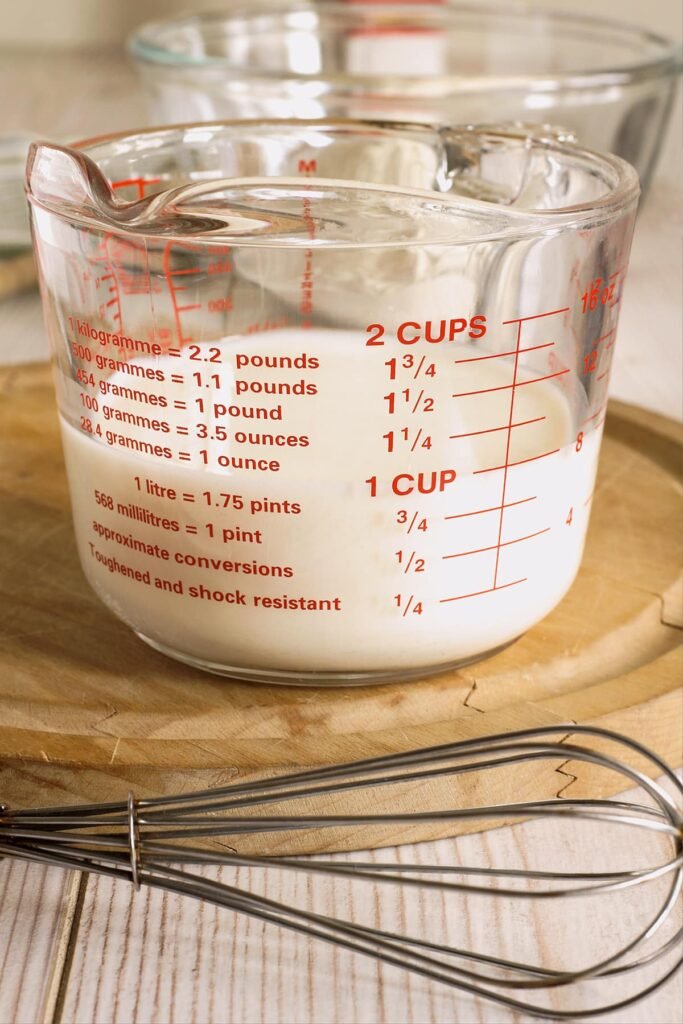

Have you ever started a recipe only to stop halfway because it asked for ingredients in cups while your measuring tool showed ounces? You’re not alone. This is one of the most common kitchen conversion questions, especially when following recipes from different countries.
The good news is that understanding how many oz in a cup is much easier than it seems. Whether you’re baking cookies, preparing a family dinner, measuring liquids, or calculating nutritional portions, knowing the relationship between cups and ounces can save time and prevent costly mistakes.
However, there’s a small twist. The answer depends on whether you’re measuring liquid ounces or dry ounces. That’s where many people get confused.
In this complete measurement guide, you’ll learn everything you need to know about cup-to-ounce conversions, including practical examples, conversion charts, baking tips, and common mistakes to avoid. By the end, you’ll confidently answer the question: how many oz in a cup every single time.
Understanding Cups and Ounces
Before diving into conversions, it’s important to understand what these measurements actually represent.
A cup is a unit of volume commonly used in cooking and baking. In the United States, one standard cup equals 8 fluid ounces.
An ounce can refer to two different things:
- Fluid ounce (fl oz): measures volume
- Dry ounce (oz): measures weight
This distinction is crucial because volume and weight are not the same thing.
For example:
- 1 cup of water weighs about 8 ounces
- 1 cup of flour weighs about 4.5 ounces
- 1 cup of shredded cheese weighs about 4 ounces
That’s why recipes sometimes require extra attention.
How Many Oz in a Cup?
The simple answer is:
| Measurement | Equivalent |
|---|---|
| 1 Cup | 8 Fluid Ounces |
| 1/2 Cup | 4 Fluid Ounces |
| 1/3 Cup | 2.67 Fluid Ounces |
| 1/4 Cup | 2 Fluid Ounces |
| 2 Cups | 16 Fluid Ounces |
| 4 Cups | 32 Fluid Ounces |
So whenever someone asks how many oz in a cup, the standard answer is:
1 cup = 8 fluid ounces
This conversion applies to liquids such as:
- Water
- Milk
- Juice
- Coffee
- Broth
- Oil
Why Cup-to-Ounce Conversions Matter
Accurate measurements can make or break a recipe.
Imagine baking a cake and accidentally adding too much flour because you assumed ounces and cups were interchangeable. The result could be a dense, dry dessert instead of a light and fluffy masterpiece.
Knowing how many oz in a cup helps with:
- Cooking accuracy
- Baking consistency
- Meal prep
- Portion control
- Nutritional tracking
- Recipe scaling
- International recipes
Moreover, understanding measurements reduces kitchen stress and increases confidence.
Fluid Ounces vs Dry Ounces
This is where many home cooks become confused.
Fluid Ounces
Fluid ounces measure volume.
Examples include:
- Water
- Milk
- Cream
- Cooking oil
- Soup stock
For liquids:
1 cup = 8 fluid ounces
Dry Ounces
Dry ounces measure weight.
Examples include:
- Flour
- Sugar
- Rice
- Oats
- Chocolate chips
For dry ingredients, one cup does not always equal eight ounces because different ingredients have different densities.
Example Comparison
| Ingredient | 1 Cup Weight |
| Water | 8 oz |
| All-Purpose Flour | 4.5 oz |
| Granulated Sugar | 7 oz |
| Brown Sugar | 7.5 oz |
| Butter | 8 oz |
| Oats | 3 oz |
As you can see, the answer to how many oz in a cup changes when discussing weight rather than liquid volume.
Cup to Ounce Conversion Chart
Here is a quick reference chart.
Common Cup Conversions
| Cups | Fluid Ounces |
| 1/8 cup | 1 oz |
| 1/4 cup | 2 oz |
| 1/3 cup | 2.67 oz |
| 1/2 cup | 4 oz |
| 2/3 cup | 5.33 oz |
| 3/4 cup | 6 oz |
| 1 cup | 8 oz |
| 1.5 cups | 12 oz |
| 2 cups | 16 oz |
| 3 cups | 24 oz |
| 4 cups | 32 oz |
Keeping this chart nearby can make recipe preparation much easier.
How Many Oz in a Cup of Water?
Water provides the simplest example because volume and weight align closely.
- 1 cup water = 8 fluid ounces
- 1 cup water weighs approximately 8 ounces
This is often why people mistakenly assume every ingredient follows the same rule.
When asking how many oz in a cup of water, the answer is straightforward:
8 ounces
How Many Oz in a Cup of Flour?
Flour behaves differently.
A standard cup of all-purpose flour weighs approximately:
4.25 to 4.5 ounces
Therefore:
- 1 cup flour ≠ 8 ounces by weight
This is why professional bakers often prefer using a kitchen scale instead of measuring cups.
How Many Oz in a Cup of Sugar?
Sugar has a different density than flour.
Granulated Sugar
- 1 cup = approximately 7 ounces
Brown Sugar
- 1 cup packed = approximately 7.5 ounces
Again, weight and volume are not identical.
Measuring Liquids Correctly
If you’re converting cups to fluid ounces, proper measuring technique matters.
Best Practices
- Use a liquid measuring cup.
- Place the cup on a flat surface.
- Check the measurement at eye level.
- Avoid holding the cup in the air.
- Fill slowly for accuracy.
These small habits improve consistency in every recipe.
Measuring Dry Ingredients Correctly
Dry ingredients require a different approach.
Flour
- Spoon flour into the measuring cup.
- Do not scoop directly from the bag.
- Level with a straight edge.
Sugar
- Fill the cup evenly.
- Level the surface.
Brown Sugar
- Pack firmly unless the recipe states otherwise.
Accurate measuring ensures that your understanding of how many oz in a cup translates into successful cooking.
US Cups vs International Cups
Another source of confusion is regional measurement differences.
United States Cup
- 236.6 milliliters
- 8 fluid ounces
Metric Cup
- 250 milliliters
UK Measurements
The UK commonly uses metric measurements rather than traditional cups.
Therefore, when using international recipes, always verify the measurement system.
Converting Cups to Milliliters
Many modern recipes include metric measurements.
Quick Reference
| Cups | Milliliters |
| 1/4 Cup | 60 ml |
| 1/2 Cup | 120 ml |
| 3/4 Cup | 180 ml |
| 1 Cup | 240 ml |
| 2 Cups | 480 ml |
| 4 Cups | 960 ml |
These conversions are useful when using measuring jugs marked in milliliters.
Baking vs Cooking Measurements
Baking requires precision.
Cooking often allows flexibility.
For example:
Cooking
If a soup recipe calls for one cup of broth, a slight variation probably won’t matter.
Baking
If a cake recipe calls for one cup of flour, even a small measurement error can affect texture, rise, and moisture.
That’s why understanding how many oz in a cup becomes especially important in baking.
Kitchen Tools That Improve Accuracy
A few inexpensive tools can dramatically improve measurement accuracy.
Essential Measuring Tools
- Liquid measuring cups
- Dry measuring cups
- Measuring spoons
- Digital kitchen scale
- Graduated measuring jug
Professional bakers rely heavily on scales because weight measurements eliminate guesswork.
Common Cup-to-Ounce Mistakes
Many kitchen errors stem from simple misunderstandings.
Mistake 1: Treating All Ingredients the Same
One cup of flour does not weigh the same as one cup of sugar.
Mistake 2: Mixing Weight and Volume
Fluid ounces measure volume.
Dry ounces measure weight.
Mistake 3: Using the Wrong Measuring Cup
Liquid cups and dry cups are designed differently.
Mistake 4: Ignoring International Differences
Not all cups are identical worldwide.
Avoiding these mistakes will help you confidently answer how many oz in a cup in various situations.
Frequently Asked Questions
Is 8 oz Always Equal to 1 Cup?
For liquid measurements, yes.
For dry ingredients, not necessarily.
How Many Oz in Half a Cup?
Half a cup equals:
4 fluid ounces
How Many Oz in Two Cups?
Two cups equals:
16 fluid ounces
How Many Oz in a Quarter Cup?
One-quarter cup equals:
2 fluid ounces
How Many Oz in Three Cups?
Three cups equals:
24 fluid ounces
Can I Use a Coffee Mug Instead of a Measuring Cup?
Not reliably.
Coffee mugs vary significantly in size and may not equal one standard cup.
Why Do Professional Bakers Use Grams?
Grams provide greater accuracy and consistency than volume measurements.
Quick Memory Tricks
Want to remember cup-to-ounce conversions faster?
Use these simple rules:
- 1 cup = 8 oz
- 2 cups = 16 oz
- 4 cups = 32 oz
- 8 cups = 64 oz
Another easy method:
Think of a standard measuring cup as holding exactly eight fluid ounces.
This mental shortcut helps when scaling recipes quickly.
Real-Life Examples
Example 1: Making Pancakes
Recipe calls for:
- 2 cups milk
Conversion:
- 2 × 8 = 16 fluid ounces
Example 2: Soup Recipe
Recipe requires:
- 4 cups broth
Conversion:
- 4 × 8 = 32 fluid ounces
Example 3: Smoothie Preparation
Recipe needs:
- 1.5 cups almond milk
Conversion:
- 1.5 × 8 = 12 fluid ounces
These practical examples show how useful it is to know how many oz in a cup when preparing meals.
The Ultimate Cup Conversion Cheat Sheet
Liquid Measurements
| Cups | Ounces |
| 1/8 | 1 oz |
| 1/4 | 2 oz |
| 1/3 | 2.67 oz |
| 1/2 | 4 oz |
| 2/3 | 5.33 oz |
| 3/4 | 6 oz |
| 1 | 8 oz |
| 2 | 16 oz |
| 4 | 32 oz |
| 8 | 64 oz |
Bookmark or print this chart for quick kitchen reference.
Conclusion
Understanding how many oz in a cup is one of the most valuable kitchen skills you can learn. While the basic answer is simple—1 cup equals 8 fluid ounces—the details matter when dealing with dry ingredients, baking recipes, and international measurement systems.
By learning the difference between fluid ounces and dry ounces, using proper measuring tools, and following reliable conversion charts, you’ll avoid common kitchen mistakes and achieve better results every time you cook or bake.