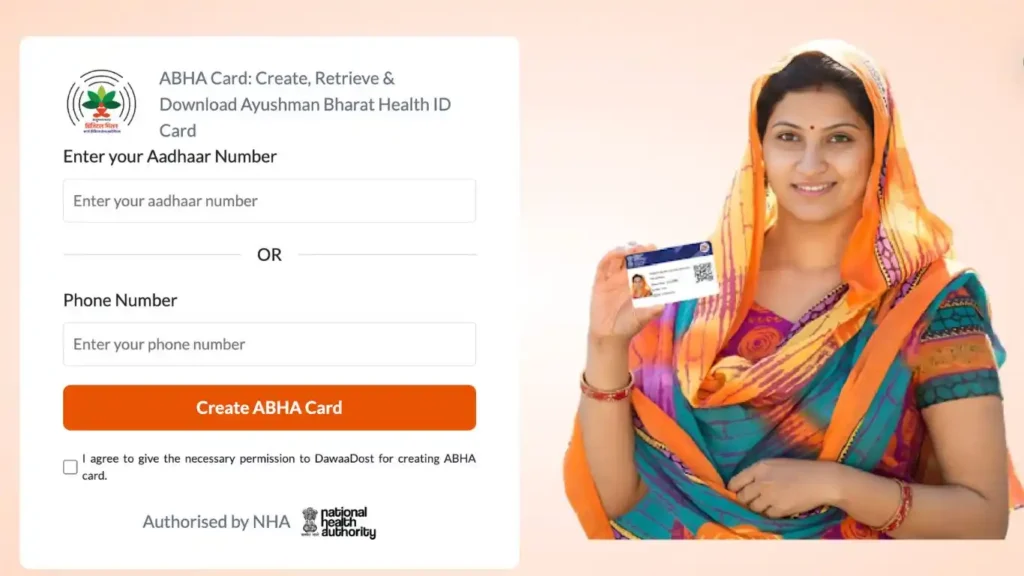

The way we manage healthcare is changing faster than most people realize. Gone are the days when patients had to carry thick files of medical reports, prescriptions, and hospital slips everywhere they went. Today, everything is becoming digital, and at the center of this transformation is the abha card.
If you’ve heard about it but still feel confused, you’re not alone. Many people are searching for simple, clear explanations of what the abha card actually is and why it matters. In this guide, we’ll break it down in a natural, easy-to-understand way so even a beginner can confidently understand it.
Think of this article as a friendly walkthrough, not a technical manual.
What is an ABHA Card?
The abha card stands for Ayushman Bharat Health Account card. It is part of India’s digital healthcare system under the Ayushman Bharat Digital Mission (ABDM), earlier known as the National Digital Health Mission (NDHM).
In simple words, the abha card is a digital health identity that stores and connects your medical records safely in one place. Instead of carrying physical documents, your health data can be accessed digitally across registered hospitals, clinics, and healthcare providers.
Some people also call it:
- Health ID card
- Digital health ID
- Health account number
- Patient health identity system
All these terms connect back to the same idea: a unified digital health record system.
The abha card gives you a unique 14-digit identification number that links your health information securely.
Why the ABHA Card Matters in 2026
Healthcare in 2026 is deeply connected with technology. Hospitals now rely on digital health records, electronic medical records (EMR), and electronic health records (EHR).
Here’s why the abha card is becoming important:
- It reduces paperwork in hospitals
- It improves hospital registration process
- It supports telemedicine consultations
- It enables faster OPD and IPD admissions
- It connects diagnostic labs and pathology reports
- It allows secure sharing of prescriptions
- It simplifies insurance claims and cashless treatment
In short, the abha card is the backbone of India’s healthcare digitization.
How Does the ABHA Card Work?
The working system of the abha card is simple but powerful.
When you visit a hospital or clinic:
- You provide your ABHA number or ABHA address
- The healthcare provider requests access to your records
- You give consent using OTP verification
- Your medical history becomes available instantly
Everything is based on consent-based data sharing. This means no one can access your records without permission.
The system also integrates:
- Aadhaar linking (UIDAI verification)
- Mobile number authentication
- Secure encryption systems
- Consent manager platforms
- Digital hospital ecosystem networks
This makes the abha card both secure and user-controlled.
Key Features of ABHA Card
The abha card is packed with useful features that improve healthcare experience.
1. Digital Health Locker
Your medical records, prescriptions, diagnostic reports, and pathology reports are stored safely.
2. Unique Health ID
Each person gets a unique 14-digit health identity.
3. Interoperability
Hospitals and clinics can share data across systems.
4. Paperless Healthcare
No need for physical files or documents.
5. Secure Data Storage
Advanced encryption ensures privacy protection.
6. Family Health Management
Some users create family health IDs for easier tracking.
7. Mobile Health App Access
You can manage everything through mobile applications.
These features make the abha card a strong foundation of digital healthcare transformation.
Benefits of ABHA Card
Let’s break down the real-world advantages of the abha card:
- Faster hospital registration
- Easy access to old medical records
- Smooth insurance claim processing
- Reduced medical paperwork
- Better coordination between doctors
- Quick emergency access to health history
- Improved telemedicine services
- Secure digital identity for healthcare
- Better outpatient services (OPD) experience
- Hassle-free inpatient services (IPD) admission
Many users feel that the abha card saves time and reduces confusion during medical visits.
How to Create an ABHA Card
Creating an abha card is a simple process. You don’t need advanced technical knowledge.
Step-by-step process:
- Visit the official health ID registration platform
- Enter your mobile number
- Verify OTP
- Choose Aadhaar or driving license for verification
- Enter personal details
- Create your ABHA number
- Generate your ABHA address (like email ID for health records)
Once completed, your abha card is ready to use.
Documents Required for ABHA Card
You typically need:
- Aadhaar card
- Mobile number linked to Aadhaar
- Basic personal details
- Optional identity proof like driving license
The process is quick because it uses digital verification systems.
ABHA Card vs Traditional Health Records
Many people still wonder how the abha card is different from old paper-based systems.
| Feature | ABHA Card | Traditional Records |
|---|---|---|
| Storage | Digital | Physical files |
| Access | Instant | Manual search |
| Sharing | Secure & electronic | Paper-based |
| Risk of loss | Very low | High |
| Convenience | High | Low |
This comparison clearly shows why the abha card is a major upgrade in healthcare management.
Common Uses of ABHA Card
The abha card is used in many real-world scenarios:
- Hospital OPD registration
- Emergency medical care
- Online doctor consultations
- Lab test record management
- Pharmacy prescription tracking
- Insurance verification
- Health checkup history access
- Chronic disease management
- Preventive healthcare tracking
With growing digital healthcare systems, the abha card is becoming more useful every year.
Privacy and Security in ABHA Card
One major concern people have is privacy. The abha card is built with strict security standards.
Important protections include:
- Data encryption
- Consent-based sharing
- OTP authentication
- Controlled access system
- No unauthorized data viewing
You always remain in control of your medical information.
Common Mistakes People Make
Many beginners misunderstand the abha card system. Here are some common mistakes:
- Thinking it is mandatory for all treatments
- Confusing it with health insurance
- Not linking mobile number properly
- Forgetting ABHA address details
- Ignoring consent settings
Avoiding these mistakes makes the abha card experience much smoother.
Conclusion
The future of healthcare is clearly digital, and the abha card is a major step in that direction. It simplifies medical record management, improves hospital experiences, and ensures secure access to health data.
From faster registrations to paperless treatment and secure health identity, the abha card is transforming how patients and doctors interact in 2026.