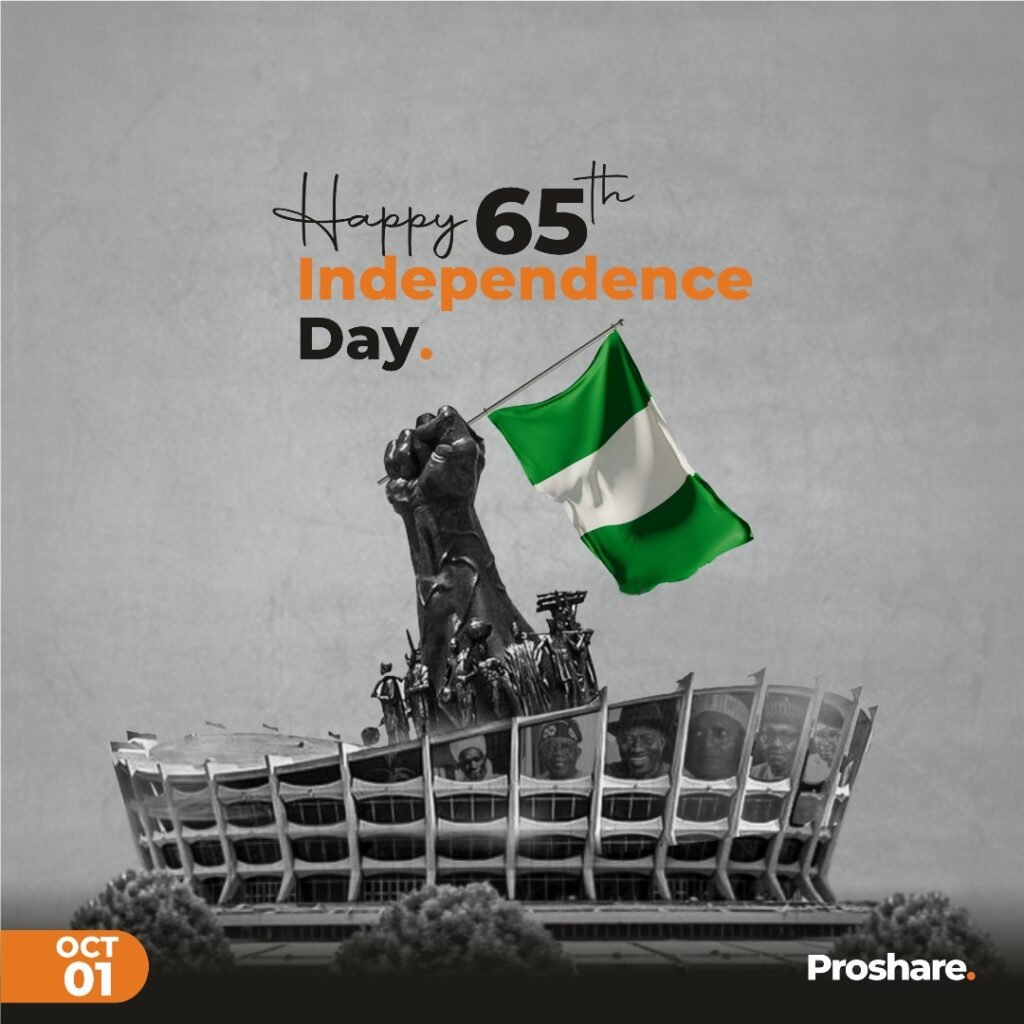

Every nation has a defining moment that changes its future forever. For Nigeria, that unforgettable moment arrived on October 1, 1960, when the country officially gained independence from British colonial rule. Today, Nigeria Independence Day is much more than a public holiday. It is a reminder of resilience, unity, sacrifice, and hope for one of Africa’s largest and most influential nations.
Every year, millions of Nigerians at home and abroad celebrate this historic day with pride. Streets come alive with the green and white national colors, schools organize cultural performances, government institutions hold ceremonial events, and families gather to reflect on the country’s remarkable journey.
Yet, Nigeria Independence Day is not only about looking back. It is also an opportunity to think about the future. It encourages citizens to appreciate their freedom, recognize the achievements of past generations, and work together to build a stronger nation.
In this article, we’ll explore the fascinating history behind Nigeria’s independence, the significance of October 1, the heroes who made freedom possible, modern celebrations, challenges since independence, and the lasting legacy that continues to shape Nigeria today.
The History of Nigeria Before Independence
Before Nigeria Independence Day became part of the national calendar, Nigeria spent decades under British colonial administration.
The territory now known as Nigeria was home to powerful kingdoms and empires long before European colonization. These included:
- The Benin Kingdom
- The Oyo Empire
- The Kanem-Bornu Empire
- The Sokoto Caliphate
- The Hausa city-states
- The Igbo communities
- The Niger Delta kingdoms
Each region had its own political systems, languages, cultures, and traditions.
British influence expanded throughout the nineteenth century, largely through trade and political agreements. Eventually, colonial rule became firmly established.
In 1914, the Northern and Southern Protectorates were merged into one colony known as Nigeria. This amalgamation brought together hundreds of ethnic groups under one administration, creating both opportunities and future challenges.
For decades afterward, Nigerians experienced colonial governance while gradually demanding greater political participation and self-rule.
The Road to Nigeria Independence Day
Growing Nationalism
As the twentieth century progressed, Nigerian nationalism gained momentum.
Educated Nigerians, journalists, lawyers, students, traditional leaders, and political activists began demanding constitutional reforms and self-government.
Several important developments fueled the independence movement:
- Increased political awareness
- Expansion of education
- Growth of newspapers
- Rise of political parties
- Labor union activities
- Constitutional conferences
- Calls for democratic representation
These movements united many Nigerians despite ethnic and regional differences.
Key Independence Leaders
Several remarkable individuals played major roles in securing Nigeria’s freedom.
Dr. Nnamdi Azikiwe
Known as one of Nigeria’s founding fathers, Azikiwe inspired nationalist movements through journalism and politics. He later became Nigeria’s first Governor-General and eventually its first President.
Sir Abubakar Tafawa Balewa
Balewa became Nigeria’s first Prime Minister following independence. His leadership helped guide the country through its early years as a sovereign nation.
Chief Obafemi Awolowo
Awolowo was a visionary politician who promoted education, regional development, constitutional reforms, and economic planning.
Sir Ahmadu Bello
As the Premier of Northern Nigeria, Ahmadu Bello was an influential political leader who contributed significantly to Nigeria’s path toward independence.
Although they sometimes disagreed politically, these leaders shared a common dream—a free Nigeria.
October 1, 1960: Nigeria Gains Independence
The most significant moment in Nigeria Independence Day history arrived on October 1, 1960.
On that historic day:
- British colonial rule officially ended.
- Nigeria became an independent nation.
- The Nigerian flag was raised.
- The British Union Jack was lowered.
- Sir Abubakar Tafawa Balewa became Prime Minister.
- Dr. Nnamdi Azikiwe became Governor-General.
- Nigeria joined the international community as an independent state.
Across the country, celebrations erupted.
People danced in the streets.
Church bells rang.
Traditional drummers performed.
Communities organized parades.
The atmosphere was filled with excitement and optimism.
For millions of Nigerians, independence represented a new beginning filled with endless possibilities.
Why Nigeria Independence Day Matters
A Symbol of Freedom
Freedom is one of the greatest gifts any nation can possess.
Nigeria Independence Day celebrates the end of foreign rule and the beginning of self-governance.
It reminds Nigerians that they have the right to determine their own future.
National Unity
Nigeria is one of the world’s most culturally diverse countries.
It has:
- More than 250 ethnic groups
- Over 500 indigenous languages
- Numerous traditional cultures
- Multiple religious communities
Although diversity sometimes creates challenges, Nigeria Independence Day encourages unity despite differences.
The celebration reminds citizens that they all belong to one nation.
Honoring National Heroes
The independence movement required courage, determination, negotiation, and sacrifice.
Every October 1, Nigerians remember the leaders, activists, educators, journalists, workers, and ordinary citizens who fought peacefully for independence.
Their legacy continues to inspire future generations.
How Nigeria Independence Day Is Celebrated
Across Nigeria, celebrations take many forms.
Government Ceremonies
The President usually addresses the nation with an Independence Day speech highlighting:
- National achievements
- Economic progress
- Security issues
- Development goals
- Unity and patriotism
- Future plans
Military parades are often organized to honor members of the armed forces.
Cultural Festivals
Nigeria’s cultural diversity becomes especially visible during Independence Day celebrations.
Communities organize performances featuring:
- Traditional dances
- Cultural exhibitions
- Folk music
- Drumming
- Storytelling
- Art displays
- Fashion showcases
These events celebrate Nigeria’s rich heritage.
School Activities
Schools across the country participate through:
- Essay competitions
- Debates
- Poetry recitals
- March-pasts
- Independence plays
- Quiz competitions
- Cultural dress days
These activities teach younger generations about Nigeria’s history.
Community Gatherings
Families and neighborhoods often celebrate together by enjoying:
- Traditional meals
- Music
- Sporting events
- Community festivals
- Religious services
- Charity activities
For many people, the day combines patriotism with family traditions.
Nigeria’s National Symbols
Several national symbols become especially important during Nigeria Independence Day celebrations.
| Symbol | Meaning |
|---|---|
| Nigerian Flag | Unity, peace, agriculture, and national pride |
| National Anthem | Patriotism and hope |
| National Coat of Arms | Strength and dignity |
| Green and White Colors | Agriculture and peace |
| Eagle | National strength |
| Horses | National dignity |
These symbols remind citizens of the ideals upon which Nigeria was founded.
Major Achievements Since Independence
Since 1960, Nigeria has experienced remarkable growth in many areas.
Economic Development
Nigeria has become one of Africa’s largest economies.
Major sectors include:
- Oil and gas
- Agriculture
- Telecommunications
- Banking
- Manufacturing
- Entertainment
- Technology
- Digital innovation
Cities such as Lagos have developed into major business hubs.
Democratic Progress
Although Nigeria has experienced military rule in the past, democratic governance has continued to strengthen since 1999.
Regular elections now allow citizens to choose their leaders through the ballot box.
Democracy remains an important part of Nigeria’s national identity.
Education
Universities, colleges, and schools have expanded significantly since independence.
Millions more Nigerians now have access to education than they did in 1960.
Higher education has produced professionals contributing globally in medicine, engineering, science, business, and technology.
Entertainment and Culture
Nigeria’s creative industries have gained international recognition.
Examples include:
- Nollywood
- Afrobeats music
- Literature
- Fashion
- Visual arts
- Digital media
Nigerian artists, filmmakers, musicians, and authors continue to shape global culture.
Challenges Since Independence
Like every nation, Nigeria has faced obstacles throughout its post-independence journey.
Some of the major challenges include:
- Political instability
- Corruption
- Economic inequality
- Youth unemployment
- Infrastructure development
- Security concerns
- Ethnic tensions
- Inflation
- Poverty
- Environmental issues
Despite these challenges, many Nigerians remain optimistic about the country’s future.
Every Nigeria Independence Day serves as a reminder that progress requires continuous effort.
The Meaning of Legacy
Legacy is about what a generation leaves behind.
The legacy of Nigeria Independence Day extends beyond one historic event.
It represents:
- Courage
- Self-determination
- Democracy
- National pride
- Cultural diversity
- Resilience
- Hope
- Freedom
- Responsibility
These values continue to influence Nigeria’s national identity.
Nigeria Independence Day Around the World
Millions of Nigerians live outside the country.
The Nigerian diaspora celebrates Independence Day in many countries through:
- Cultural festivals
- Embassy events
- Community gatherings
- Educational programs
- Traditional music
- Nigerian cuisine
- Independence dinners
- Networking events
These celebrations strengthen cultural identity while connecting Nigerians worldwide.
Interesting Facts About Nigeria Independence Day
Here are some fascinating facts many people may not know:
| Fact | Details |
|---|---|
| Independence Date | October 1, 1960 |
| Colonial Power | United Kingdom |
| First Prime Minister | Sir Abubakar Tafawa Balewa |
| First Governor-General | Dr. Nnamdi Azikiwe |
| Republican Status | Achieved in 1963 |
| National Colors | Green and White |
| Largest Population in Africa | Nigeria remains Africa’s most populous nation |
| Official Language | English |
| Number of Ethnic Groups | More than 250 |
| Indigenous Languages | Over 500 |
Lessons We Can Learn from Nigeria Independence Day
Every Independence Day carries valuable lessons.
Freedom Requires Responsibility
Political independence is only the beginning.
Building a prosperous nation requires active participation from citizens.
Unity Creates Strength
Nigeria’s diversity is one of its greatest strengths.
Mutual respect and cooperation help create lasting national progress.
Leadership Matters
Visionary leadership continues to shape the country’s future.
Strong institutions and accountable governance remain essential.
Young People Shape Tomorrow
Nigeria has one of the youngest populations in the world.
Young entrepreneurs, innovators, students, artists, and professionals will determine the country’s next chapter.
Conclusion
Nigeria Independence Day is far more than a date on the calendar. It represents the triumph of self-determination, the courage of visionary leaders, and the enduring spirit of a diverse nation united by a common future. From the historic events of October 1, 1960, to today’s colorful celebrations, the occasion remains one of the most significant milestones in Nigerian history.