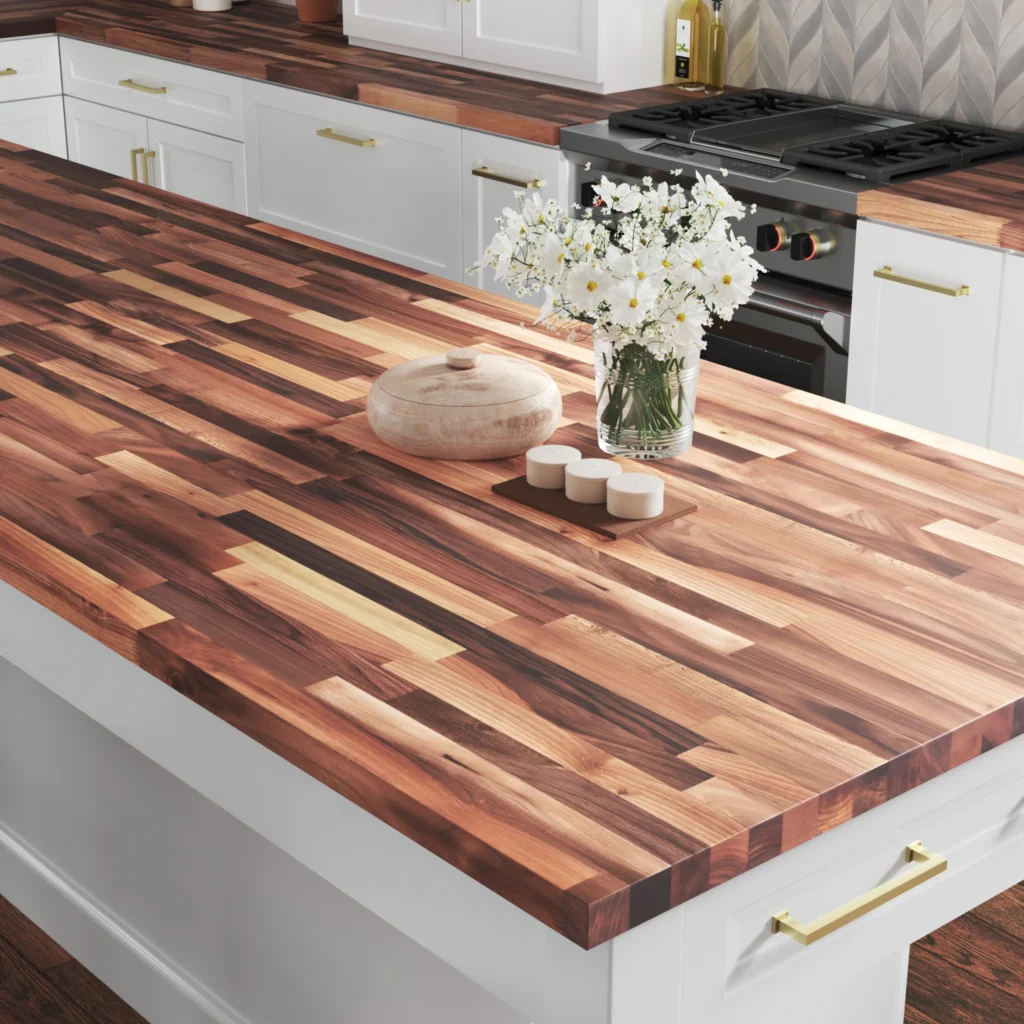

Few countertop materials can match the warmth and charm of butcher block countertops. While stone surfaces like quartz and granite dominate modern kitchens, wood countertops continue to win over homeowners who want a timeless, inviting space. They bring natural beauty, practical functionality, and a handcrafted character that synthetic materials simply cannot replicate.
Whether you’re planning a complete kitchen remodel or replacing outdated counters, understanding the advantages, disadvantages, and overall costs of butcher block surfaces is essential before making your investment.
This guide covers everything you need to know—from wood species and maintenance to installation costs and long-term durability—so you can decide whether butcher block countertops are the right choice for your home.
What Are Butcher Block Countertops?
Butcher block countertops are work surfaces made by joining strips of solid hardwood together to create one thick, durable slab. Unlike laminate or engineered materials, these countertops showcase real wood grain, making every piece completely unique.
Originally used in butcher shops because of their strength and knife-friendly surface, butcher block has evolved into one of the most popular countertop choices for residential kitchens, laundry rooms, islands, bars, and even home offices.
Common hardwoods include:
- Maple
- Oak
- Walnut
- Birch
- Cherry
- Beech
- Bamboo (technically a grass but commonly grouped with butcher block options)
- Teak
- Ash
Each wood species offers different grain patterns, colors, hardness ratings, and pricing.
Types of Butcher Block Countertops
Not all butcher block is made the same. The construction method affects both appearance and durability.
Edge Grain
Edge grain countertops are created by gluing long wooden boards together with their narrow edges facing upward.
Benefits include:
- Strong construction
- Affordable pricing
- Smooth appearance
- Excellent for kitchens
- Easy maintenance
This is the most common style found in residential homes.
End Grain
End grain construction exposes the ends of wooden blocks, creating a checkerboard appearance.
Advantages include:
- Extremely durable
- Self-healing surface
- Ideal for heavy chopping
- Professional butcher shop appearance
However, end grain usually costs significantly more.
Face Grain
Face grain countertops display the widest side of the wood.
Features include:
- Beautiful wood grain
- Decorative appearance
- Less suitable for heavy food preparation
- Popular for kitchen islands
Why Homeowners Love Butcher Block Countertops
There is something comforting about natural wood. Instead of feeling cold like stone, butcher block creates warmth and personality.
Some of the biggest reasons homeowners choose butcher block countertops include:
- Natural appearance
- Rustic charm
- Farmhouse appeal
- Modern versatility
- Affordable luxury
- DIY-friendly installation
- Renewable material
- Easy repairs
- Timeless style
Wood also pairs beautifully with white cabinets, black cabinets, stainless steel appliances, subway tile backsplashes, and open shelving.
Pros of Butcher Block Countertops
Let’s look at the biggest advantages.
Natural Beauty
Every slab has its own unique wood grain, knots, and color variation.
Unlike manufactured countertops, no two butcher block surfaces look identical.
If you love organic materials, wood offers unmatched visual warmth.
Easy to Repair
One of the biggest benefits is repairability.
Small scratches?
Simply sand them away.
Water spots?
Light sanding followed by mineral oil usually restores the finish.
Unlike granite or quartz, which require professional repairs, butcher block can often be renewed at home.
Budget-Friendly
Compared to premium countertop materials, butcher block countertops are generally more affordable.
This makes them attractive for:
- Kitchen renovations
- Rental properties
- Vacation homes
- DIY remodels
Eco-Friendly Option
Many manufacturers use sustainably harvested hardwood.
Since wood is renewable, butcher block has a lower environmental impact than many stone products that require extensive mining and transportation.
Comfortable Work Surface
Wood naturally absorbs impact.
That means:
- Less strain on dishes
- Reduced glass breakage
- Softer feel during food preparation
Perfect for DIY Installation
Unlike granite slabs weighing hundreds of pounds, butcher block is much easier to transport and install.
Many homeowners successfully install their own countertops over a weekend.
Adds Character
Wood naturally develops a gentle patina over time.
Instead of looking worn out, quality butcher block often becomes even more attractive with age.
Cons of Butcher Block Countertops
Despite its appeal, butcher block isn’t perfect.
Understanding the drawbacks helps prevent disappointment later.
Requires Regular Maintenance
Wood needs protection.
Without regular oiling or sealing, the countertop may dry out, crack, or absorb moisture.
Maintenance usually involves:
- Mineral oil
- Food-safe finish
- Wood conditioner
- Beeswax treatment
Vulnerable to Water Damage
Standing water is the biggest enemy.
If water penetrates the wood, problems may include:
- Warping
- Swelling
- Mold
- Staining
Areas around sinks require extra attention.
Scratches Easily
Wood is softer than stone.
Sharp knives, heavy cookware, and everyday use can leave marks.
Fortunately, most scratches can be sanded away.
Can Stain
Wine, coffee, berries, cooking oil, turmeric, and tomato sauce may leave stains if spills remain too long.
Prompt cleaning minimizes damage.
Heat Sensitivity
Unlike granite, butcher block should never receive hot pans directly.
Always use:
- Trivets
- Hot pads
- Heat-resistant mats
Needs Periodic Refinishing
Depending on usage, refinishing may be needed every few years.
Fortunately, refinishing costs much less than replacing the countertop.
How Much Do Butcher Block Countertops Cost?
Pricing depends on wood species, thickness, customization, and installation.
| Type | Average Cost Per Square Foot |
|---|---|
| Birch | $30–$70 |
| Maple | $40–$100 |
| Oak | $50–$120 |
| Cherry | $70–$150 |
| Walnut | $80–$200 |
| Teak | $100–$250 |
| End Grain | $150–$300 |
Installation Costs
Professional installation generally ranges between:
- $30–$80 per square foot
DIY installation can significantly reduce overall expenses.
Additional Expenses
Budget for:
- Sink cutouts
- Faucet holes
- Edge profiles
- Backsplash
- Delivery
- Sealing products
- Wood conditioner
- Maintenance supplies
Factors That Affect Price
Several variables determine the final cost.
Wood Species
Harder, exotic woods cost more.
For example:
- Walnut costs more than birch.
- Teak costs more than maple.
Thickness
Standard options include:
- 1.5 inches
- 2 inches
- 3 inches
Thicker slabs generally cost more.
Custom Fabrication
Curved edges, waterfall designs, and custom dimensions increase pricing.
Finish Type
Factory-finished countertops often cost more than unfinished versions but save time during installation.
Maintenance Tips for Long-Lasting Beauty
Taking care of butcher block countertops isn’t difficult if you stay consistent.
Daily Care
- Wipe spills immediately.
- Clean with mild soap.
- Dry thoroughly.
- Avoid soaking the surface.
Monthly Maintenance
Depending on use:
- Apply food-grade mineral oil.
- Buff with a clean cloth.
- Inspect for dry spots.
Annual Maintenance
Every year:
- Check the finish.
- Lightly sand worn areas.
- Reapply protective coating if necessary.
Proper care can help wood countertops last for decades.
Best Wood Species for Butcher Block Countertops
Maple
Maple remains the industry favorite.
Advantages include:
- Durable
- Fine grain
- Affordable
- Food-safe
- Light color
Walnut
Walnut provides rich, luxurious dark brown tones.
Ideal for:
- Luxury kitchens
- Contemporary homes
- Accent islands
Oak
Oak features bold grain patterns and excellent durability.
It works well in traditional and farmhouse kitchens.
Cherry
Cherry develops a deeper color over time.
Many homeowners appreciate its elegant aging process.
Birch
Birch offers an affordable alternative with a clean appearance.
Perfect for budget-conscious renovations.
Are Butcher Block Countertops Sanitary?
This question comes up often.
Surprisingly, properly maintained wood naturally inhibits bacterial growth better than many people assume.
The key is good cleaning habits.
Always:
- Wash after food preparation.
- Disinfect when needed.
- Keep the surface dry.
- Maintain the protective finish.
Using separate cutting boards for raw meat is still recommended.
Butcher Block vs Granite
| Feature | Butcher Block | Granite |
| Appearance | Warm | Elegant |
| Cost | Lower | Higher |
| Maintenance | Regular oiling | Periodic sealing |
| Heat Resistance | Moderate | Excellent |
| Repairability | Easy | Difficult |
| DIY Installation | Easy | Difficult |
| Natural Feel | Excellent | Moderate |
Butcher Block vs Quartz
Quartz offers greater stain resistance and requires less maintenance.
However, butcher block countertops provide:
- Natural warmth
- Better repairability
- Lower installation cost
- Authentic wood character
The right choice depends on your lifestyle and design preferences.
Design Ideas for Butcher Block Countertops
Wood fits almost every decorating style.
Popular combinations include:
- White shaker cabinets
- Matte black hardware
- Farmhouse sink
- Open wood shelving
- Brass fixtures
- Marble backsplash
- Subway tile
- Industrial lighting
- Scandinavian design
- Modern farmhouse kitchens
- Rustic cabins
- Coastal homes
Many homeowners also install butcher block only on the kitchen island while using quartz around the perimeter.
This creates visual contrast while reducing maintenance.
Are Butcher Block Countertops Worth It?
For many homeowners, absolutely.
If you appreciate natural materials and don’t mind a little routine maintenance, butcher block delivers tremendous value.
They’re especially worthwhile if you want:
- A cozy kitchen
- Affordable remodeling
- DIY-friendly installation
- Easy future repairs
- Sustainable materials
- A timeless appearance
On the other hand, if you prefer completely maintenance-free countertops, quartz or solid surface materials may better match your lifestyle.
Buying Tips Before You Decide
Before purchasing butcher block countertops, keep these recommendations in mind:
- Choose hardwood over softwood.
- Verify moisture content.
- Inspect grain consistency.
- Purchase extra finish for future maintenance.
- Seal every side before installation.
- Protect areas around sinks.
- Use cutting boards.
- Never place hot cookware directly on the surface.
- Compare warranties.
- Calculate installation costs before ordering.
These simple steps can help you avoid expensive surprises later.
Conclusion
Butcher block countertops remain one of the most beautiful and versatile countertop choices available today. They combine natural warmth, practical functionality, and timeless appeal in a way that few other materials can. While they do require regular care, the payoff is a surface that ages gracefully and can often be restored instead of replaced.