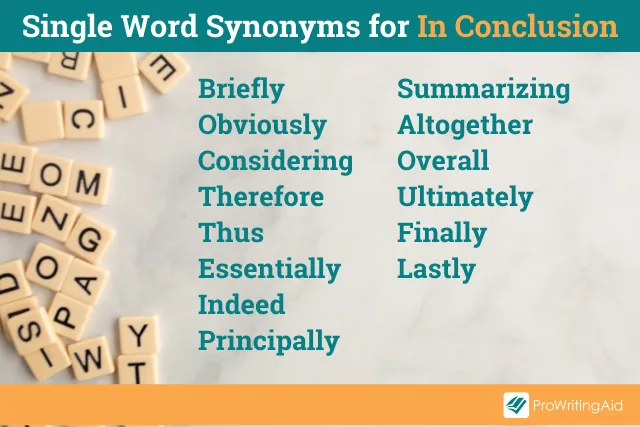

Writing a strong conclusion can make the difference between content that feels complete and content that leaves readers hanging. Yet many writers fall into the habit of using the same phrase repeatedly: “in conclusion.”
While there’s nothing wrong with the expression itself, overusing it can make your writing sound predictable, formal, or even robotic. Whether you’re crafting an essay, blog post, business report, email, or presentation, finding the right in conclusion synonym can instantly elevate your communication.
The good news? English offers dozens of alternatives that fit different tones, audiences, and contexts.
In this guide, you’ll discover 15 powerful substitutes for “in conclusion,” learn when to use each one, and see practical examples that help your writing flow naturally.
Why Look for an In Conclusion Synonym?
Readers appreciate variety. Repeating the same transition phrase throughout multiple pieces of content can weaken your message and reduce engagement.
Using an effective in conclusion synonym helps you:
- Improve readability
- Sound more natural and conversational
- Match the tone of your audience
- Avoid repetitive language
- Create smoother transitions
- Strengthen your closing statement
- Enhance academic and professional writing
- Boost content quality for SEO
Moreover, search engines increasingly prioritize content that reads naturally. Using varied vocabulary and semantic keywords makes your writing more comprehensive and user-focused.
When Should You Use Conclusion Transition Words?
Conclusion phrases signal that you’re wrapping up your main points. They help readers understand that the discussion is ending and prepare them for a final takeaway.
You might need a conclusion transition when writing:
- Academic essays
- Research papers
- Blog posts
- Business reports
- Marketing copy
- Speeches
- Case studies
- Emails
- Presentations
- Articles
However, choosing the right in conclusion synonym depends on your audience and purpose.
For example, a formal report requires different language than a casual blog article.
15 Powerful In Conclusion Synonym Alternatives
1. To Sum Up
“To sum up” is concise, clear, and easy to understand.
Best for: Blogs, presentations, and general writing.
Example:
To sum up, investing in quality content improves both search rankings and audience trust.
2. In Summary
This phrase works well in academic and professional contexts.
Best for: Reports, essays, and research papers.
Example:
In summary, customer feedback revealed three key areas for improvement.
3. Ultimately
“Ultimately” adds a sense of final judgment or outcome.
Best for: Opinion pieces and persuasive writing.
Example:
Ultimately, consistency matters more than perfection.
4. To Conclude
A direct alternative that maintains a formal tone.
Best for: Academic papers and speeches.
Example:
To conclude, renewable energy investments benefit both the economy and the environment.
5. All Things Considered
This phrase suggests you’ve evaluated multiple perspectives.
Best for: Reviews, comparisons, and analytical content.
Example:
All things considered, remote work offers significant advantages for many businesses.
6. In Closing
Simple and effective, especially in spoken communication.
Best for: Presentations and speeches.
Example:
In closing, thank you for your time and thoughtful questions.
7. On the Whole
This expression summarizes an overall impression.
Best for: Evaluations and reviews.
Example:
On the whole, the project exceeded expectations.
8. Taking Everything Into Account
This phrase emphasizes careful consideration.
Best for: Formal analysis and reports.
Example:
Taking everything into account, the proposed strategy offers the highest return on investment.
9. Overall
Short, versatile, and widely used.
Best for: Blogs, articles, and casual writing.
Example:
Overall, small improvements often lead to significant long-term results.
10. In the Final Analysis
This option sounds thoughtful and authoritative.
Best for: Editorials and analytical writing.
Example:
In the final analysis, customer satisfaction determines long-term success.
11. As a Final Point
This phrase smoothly introduces your last idea.
Best for: Business communication and presentations.
Example:
As a final point, ongoing training is essential for team growth.
12. In Essence
Perfect when distilling complex ideas into a simple takeaway.
Best for: Educational content and summaries.
Example:
In essence, effective communication builds stronger relationships.
13. To Wrap Up
A conversational alternative with a friendly tone.
Best for: Blog posts, podcasts, and informal presentations.
Example:
To wrap up, focus on quality rather than quantity.
14. In Short
This phrase works well when delivering a concise summary.
Best for: Articles and quick recaps.
Example:
In short, user experience directly affects conversion rates.
15. At the End of the Day
A popular idiomatic expression that emphasizes the main point.
Best for: Informal discussions and opinion pieces.
Example:
At the end of the day, your habits shape your results.
Quick Comparison Table: Choosing the Right In Conclusion Synonym
| Synonym | Tone | Best Use Case |
|---|---|---|
| To Sum Up | Neutral | Blogs, articles |
| In Summary | Formal | Academic writing |
| Ultimately | Persuasive | Opinion content |
| To Conclude | Formal | Essays, reports |
| All Things Considered | Analytical | Reviews |
| In Closing | Professional | Speeches |
| On the Whole | Neutral | Evaluations |
| Taking Everything Into Account | Formal | Reports |
| Overall | Casual | Blog posts |
| In the Final Analysis | Authoritative | Editorials |
| As a Final Point | Professional | Presentations |
| In Essence | Educational | Explanations |
| To Wrap Up | Conversational | Informal content |
| In Short | Concise | Summaries |
| At the End of the Day | Informal | Discussions |
How to Choose the Best In Conclusion Synonym
Selecting the right in conclusion synonym isn’t just about avoiding repetition. It’s about matching your language to your audience.
Ask yourself these questions:
Who Is Reading Your Content?
Academic readers expect formal transition words.
Online audiences often prefer conversational language.
Business professionals typically appreciate concise, direct wording.
What Tone Are You Trying to Create?
Your conclusion should feel consistent with the rest of your writing.
For example:
- Formal: In summary, to conclude, in the final analysis
- Professional: Overall, as a final point, in closing
- Casual: To wrap up, at the end of the day
How Complex Is Your Topic?
Complex subjects may benefit from phrases like:
- In essence
- Taking everything into account
- All things considered
Simple topics often need only:
- Overall
- In short
- To sum up
Common Mistakes to Avoid
Even the best in conclusion synonym can lose its impact when used incorrectly.
Avoid these common errors:
Using the Same Phrase Repeatedly
Variety improves readability and keeps your audience engaged.
Choosing an Overly Formal Expression
A casual blog post doesn’t need language that sounds like a legal document.
Adding a Conclusion Phrase Without a Real Summary
Your conclusion should reinforce key points rather than simply announce that you’re ending.
Introducing New Ideas
The conclusion is not the place for fresh arguments or unexpected information.
Overcomplicating Your Language
Simple, clear wording usually works best.
Examples of In Conclusion Synonyms in Different Writing Styles
Academic Writing
In summary, the findings demonstrate a strong relationship between sleep quality and productivity.
Business Communication
Overall, the proposed strategy aligns with our long-term objectives.
Blog Posts
To wrap up, small changes in your daily routine can create lasting results.
Speeches
In closing, I encourage everyone to take action today.
Marketing Content
Ultimately, the best solution is the one that meets your customers’ needs.
Final Thoughts
Finding the right in conclusion synonym is a simple way to make your writing more engaging, professional, and memorable.
Rather than relying on the same phrase every time, choose alternatives that match your audience, purpose, and tone. Whether you prefer “overall,” “to wrap up,” “in summary,” or “ultimately,” the right words can strengthen your message and leave a lasting impression.
The next time you reach the end of an article, essay, or presentation, experiment with a new conclusion phrase. Your readers will notice the difference.