
Losing someone you love changes everything in an instant. In those moments, even the simplest text message can feel impossible to write. You want to offer comfort, but you’re afraid of saying the wrong thing. You worry your words might sound awkward, impersonal, or even hurtful.
If you’ve ever stared at a blank card wondering what to write, you’re not alone.
Learning how to write a condolence message isn’t about finding the perfect words. It’s about showing up with kindness, sincerity, and compassion when someone needs support the most.
A thoughtful sympathy message won’t erase grief. However, it reminds the person who is mourning that they aren’t carrying their pain alone.
In this guide, you’ll learn exactly how to write a condolence message, what to say, what to avoid, and how to create a heartfelt note that feels genuine rather than scripted.
Why Condolence Messages Matter More Than You Think
During times of loss, grieving people often struggle to remember details, conversations, or events. Yet many keep sympathy cards, emails, letters, and text messages for years.
A simple expression of sympathy can offer:
- Emotional support
- Comfort during difficult times
- Reassurance that others care
- A sense of connection
- Validation of their grief
- Encouragement during the healing process
Even a short message can leave a lasting impression.
The truth is, silence often feels worse than imperfect words.
How to Write a Condolence Message: The Simple Four-Part Formula
If you’re unsure where to begin, use this straightforward structure.
1. Acknowledge the Loss
Start by mentioning the person who passed away or recognizing the difficult situation.
Examples:
- “I was deeply saddened to hear about your father’s passing.”
- “I’m so sorry for the loss of your sister.”
- “I was heartbroken to learn about Michael’s death.”
This opening shows that you’re aware of their loss and gives context to your message.
2. Express Your Sympathy
Share your sincere condolences using simple, compassionate language.
Examples:
- “Please accept my heartfelt condolences.”
- “My thoughts are with you and your family.”
- “I can’t imagine what you’re going through, but I’m thinking of you.”
When learning how to write a condolence message, remember that authenticity matters more than eloquence.
3. Share a Memory or Positive Thought
If you knew the deceased personally, mention a specific memory, quality, or story.
Examples:
- “Your mother always made everyone feel welcome.”
- “I’ll never forget John’s kindness and sense of humor.”
- “Your brother’s generosity touched so many lives.”
Personal memories make condolence messages feel meaningful and unique.
4. Offer Support
End your message with a practical or emotional offer of help.
Examples:
- “Please let me know if there’s anything I can do.”
- “I’m here for you whenever you need to talk.”
- “I’d be happy to help with meals, errands, or anything else you need.”
Follow through if you make an offer.
The Golden Rule: Keep It Simple
One of the biggest mistakes people make when learning how to write a condolence message is overthinking every word.
You don’t need to write a long letter.
You don’t need profound wisdom.
You don’t need to solve someone’s grief.
You simply need to acknowledge their pain and show you care.
Sometimes, the most comforting messages are the shortest ones.
For example:
“I’m so sorry for your loss. Please know that you’re in my thoughts.”
That’s enough.
What to Say in a Condolence Message
If you’re struggling to find the right words, consider these thoughtful phrases.
General Sympathy Phrases
- Thinking of you during this difficult time
- Sending you love and strength
- Wishing you peace and comfort
- Holding you close in my thoughts
- My deepest sympathies to you and your family
- Sharing in your sorrow
- Keeping you in my prayers
- With heartfelt condolences
- May you find comfort in cherished memories
- Sending caring thoughts your way
Messages for Close Friends
- I’m here for you, no matter what you need.
- You don’t have to go through this alone.
- I’m only a phone call away.
- I wish I could take away your pain.
- I’m holding you in my heart.
Messages for Coworkers
- Please accept my sincere condolences.
- Thinking of you and your family during this difficult period.
- Wishing you strength and comfort in the days ahead.
- Our team is here to support you.
Messages for Someone You Don’t Know Well
- I was sorry to hear about your loss.
- Please accept my sympathy during this difficult time.
- My thoughts are with you and your loved ones.
What Not to Say in a Sympathy Message
Knowing how to write a condolence message also means understanding what to avoid.
Even well-intentioned comments can unintentionally cause pain.
Avoid phrases like:
- “Everything happens for a reason.”
- “They’re in a better place.”
- “At least they lived a long life.”
- “I know exactly how you feel.”
- “You’ll get over this.”
- “Stay strong.”
- “Time heals all wounds.”
These statements may minimize grief or shift focus away from the person’s feelings.
Instead, listen more than you speak.
Choose empathy over explanations.
Common Condolence Message Mistakes
Here are some common errors people make.
| Mistake | Better Approach |
|---|---|
| Making the message about yourself | Focus on the grieving person |
| Giving unsolicited advice | Offer support instead |
| Comparing losses | Acknowledge their unique grief |
| Using clichés excessively | Write naturally and sincerely |
| Avoiding the person’s name | Mention the deceased respectfully |
| Promising help you can’t provide | Make realistic offers |
Understanding these mistakes is an important step in learning how to write a condolence message that truly helps.
How to Write a Condolence Message for Different Situations
Every loss is different. Your message should reflect the relationship and circumstances.
Loss of a Parent
Parents often shape every part of our lives.
Example:
“I’m deeply sorry for the loss of your mother. Her warmth and kindness touched everyone around her. Please know that I’m thinking of you and your family.”
Loss of a Spouse or Partner
Example:
“My heart breaks for you during this unimaginable loss. Your love for each other was evident to everyone who knew you.”
Loss of a Child
The death of a child is especially devastating.
Keep your message simple and gentle.
Example:
“There are no words for a loss this profound. I’m holding you in my thoughts and sending all my love.”
Loss of a Friend
Example:
“I was deeply saddened to hear about Alex’s passing. I’ll always remember his laughter and generous spirit.”
Loss of a Pet
Pet grief is real and deserves recognition.
Example:
“I’m so sorry for the loss of Bella. She brought so much joy and companionship to your life.”
Condolence Messages for Texts, Cards, and Social Media
The medium matters.
Text Messages
Keep it brief but heartfelt.
Example:
“I just heard the news. I’m so sorry for your loss. Thinking of you today.”
Sympathy Cards
Cards allow more space for personal memories and thoughtful words.
Example:
“Please accept my heartfelt condolences. Sarah’s kindness and compassion will never be forgotten.”
Social Media Comments
Be respectful and concise.
Example:
“Sending love and heartfelt condolences to you and your family.”
Avoid sharing personal stories publicly unless appropriate.
Cultural and Religious Considerations
When learning how to write a condolence message, it’s important to respect cultural traditions and religious beliefs.
If you know the person’s faith or customs, you can tailor your message accordingly.
However, if you’re uncertain, keep your words neutral and compassionate.
Safe phrases include:
- Thinking of you and your family
- Wishing you comfort and peace
- Sending my deepest sympathy
Avoid making assumptions about spiritual beliefs.
Should You Mention Your Own Experience With Loss?
Sometimes.
If you’ve experienced a similar loss, a brief mention can help the person feel understood.
However, don’t shift the focus away from them.
Instead of saying:
“When my father died, I felt exactly the same.”
Try:
“After losing my father, I remember how overwhelming those early days felt. Please know I’m here for you.”
Empathy works best when it creates connection rather than comparison.
Examples of Complete Condolence Messages
Here are a few examples you can adapt.
Example 1: Simple and Heartfelt
“I’m so sorry for your loss. Please accept my deepest condolences. Thinking of you and your family during this difficult time.”
Example 2: Personal Message
“I was heartbroken to hear about David’s passing. I’ll always remember his kindness and wonderful sense of humor. Please know that I’m here for you whenever you need support.”
Example 3: Professional Message
“Please accept my sincere condolences on your recent loss. Our thoughts are with you and your family during this difficult time.”
Example 4: Close Friend
“I wish I had the right words to ease your pain. Please know that you are deeply loved, and I’m here for anything you need.”
How Long Should a Condolence Message Be?
There is no perfect length.
A meaningful condolence message can be:
- One sentence
- A short paragraph
- A handwritten letter
The key is sincerity.
When considering how to write a condolence message, remember that quality matters more than quantity.
A few thoughtful words often carry more comfort than a lengthy message filled with clichés.
Why Handwritten Notes Still Matter
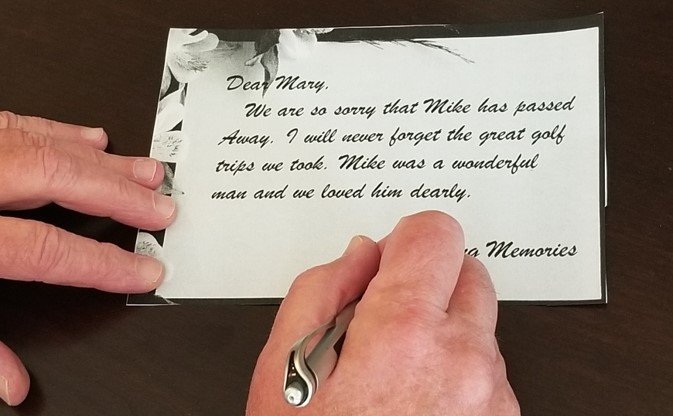
In a world of instant communication, handwritten sympathy notes feel personal and intentional.
Taking time to write a card shows care and thoughtfulness.
Many grieving people save these messages and revisit them during difficult moments.
If possible, consider sending a handwritten note rather than relying solely on digital communication.
Your words may become a treasured source of comfort.
Final Thoughts: Your Presence Matters More Than Perfect Words
Learning how to write a condolence message isn’t about mastering etiquette or finding flawless phrases.
It’s about compassion.
It’s about showing someone they’re seen, supported, and cared for during one of life’s hardest moments.
Don’t let fear of saying the wrong thing prevent you from reaching out.
A sincere message—even an imperfect one—is almost always better than silence.
So take a deep breath, write from the heart, and trust that your kindness will matter more than your wording ever could.
Have you ever received a condolence message that brought you comfort during a difficult time? Share your thoughts and experiences with others who may be struggling to find the right words.