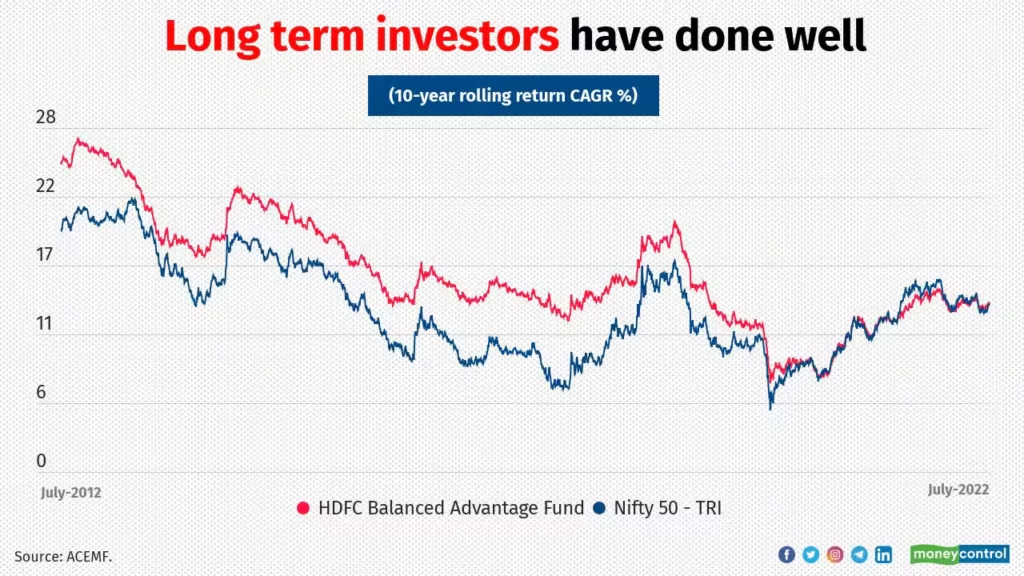

Investing is often a balancing act. Most investors want the growth potential of equities, but they also seek the stability and comfort that debt investments can provide. Finding that middle ground can be challenging, especially during volatile market conditions. This is where HDFC Balanced Advantage Fund Growth has gained significant attention among investors looking for a blend of growth, risk management, and long-term wealth creation.
Unlike traditional equity funds that remain heavily invested in stocks regardless of market conditions, this fund follows a dynamic asset allocation strategy. It adjusts its exposure between equity and debt depending on market valuations and opportunities. As a result, investors get a portfolio that aims to participate in market rallies while attempting to reduce downside risk during uncertain periods.
Whether you’re a first-time investor, a retirement planner, or someone looking to diversify your investment portfolio, understanding how HDFC Balanced Advantage Fund Growth works can help you make a more informed decision. Let’s take a detailed look at its returns, risks, benefits, taxation, portfolio structure, and suitability.
What is HDFC Balanced Advantage Fund Growth?
HDFC Balanced Advantage Fund Growth is a hybrid mutual fund that dynamically allocates assets between equity and debt instruments. The fund manager actively changes the asset mix based on market valuations, economic conditions, interest rate trends, and investment opportunities.
The primary goal is to generate capital appreciation while managing volatility through diversification.
Unlike aggressive equity funds that may maintain high stock exposure at all times, this balanced advantage fund seeks to provide a smoother investment journey by adjusting allocations when markets appear overvalued or undervalued.
Key Features
- Dynamic asset allocation
- Combination of equity and debt investments
- Professional fund management
- Long-term wealth creation potential
- Lower volatility compared to pure equity funds
- Suitable for moderate-risk investors
- Potential tax efficiency through equity-oriented structure
How Does HDFC Balanced Advantage Fund Growth Work?
The core philosophy behind HDFC Balanced Advantage Fund Growth is flexibility.
When equity markets become expensive, the fund may reduce effective equity exposure and increase debt allocation. Conversely, when stock valuations become attractive, the fund may increase equity participation.
This dynamic strategy helps the fund attempt to:
- Capture market upside
- Manage downside risk
- Reduce portfolio volatility
- Improve risk-adjusted returns
- Maintain investment discipline
For example, if the stock market experiences a sharp rally and valuations become stretched, the fund manager may shift some assets into bonds, treasury instruments, or fixed-income securities. This approach can help cushion the portfolio during potential market corrections.
Investment Objective
The primary investment objective of HDFC Balanced Advantage Fund Growth is to provide long-term capital appreciation along with income generation through a balanced mix of equity and debt securities.
The fund aims to:
- Create wealth over the long term
- Manage market fluctuations
- Preserve capital during downturns
- Deliver consistent investment performance
- Offer diversified exposure
Historical Returns and Performance
One of the biggest reasons investors consider HDFC Balanced Advantage Fund Growth is its track record of delivering competitive returns while managing risk.
Although mutual fund returns vary depending on market conditions, balanced advantage funds have generally shown the ability to perform reasonably well across different market cycles.
Factors Influencing Returns
Several elements affect the performance of the fund:
Equity Market Performance
A significant portion of the portfolio remains linked to stock market movements. Strong corporate earnings and economic growth can boost returns.
Interest Rate Environment
Debt investments benefit from favorable interest rate movements and bond market performance.
Asset Allocation Decisions
The fund manager’s ability to shift between equity and debt at the right time plays a crucial role.
Economic Conditions
Inflation, GDP growth, fiscal policies, and global market trends can impact returns.
Why Investors Appreciate the Return Profile
Many investors prefer HDFC Balanced Advantage Fund Growth because it often provides:
- Better stability than pure equity funds
- Higher growth potential than traditional debt funds
- Lower drawdowns during market corrections
- Consistent long-term wealth-building opportunities
Benefits of Investing in HDFC Balanced Advantage Fund Growth
1. Dynamic Risk Management
One of the strongest advantages of HDFC Balanced Advantage Fund Growth is its ability to adapt to changing market conditions.
Rather than maintaining a fixed asset allocation, the fund actively adjusts exposure based on market valuations.
This flexibility can help reduce risk during uncertain periods.
2. Diversification Benefits
Diversification remains one of the most effective investment strategies.
The fund typically invests across:
- Large-cap stocks
- Mid-cap stocks
- Debt securities
- Government bonds
- Corporate bonds
- Money market instruments
A diversified portfolio helps reduce concentration risk.
3. Suitable for Long-Term Investors
Investors with a long-term horizon often appreciate the balanced nature of the fund.
Whether saving for retirement, children’s education, or future financial goals, the fund can fit well into a long-term financial planning strategy.
4. Professional Fund Management
The investment decisions are handled by experienced fund managers who analyze:
- Market trends
- Valuation metrics
- Economic indicators
- Corporate fundamentals
- Interest rate movements
This professional approach removes much of the emotional decision-making that individual investors often struggle with.
5. Potential Tax Efficiency
Balanced advantage funds are often structured to qualify as equity-oriented funds through hedging strategies.
This may result in more favorable taxation compared to certain debt-oriented investments, depending on prevailing tax regulations.
6. Lower Volatility
Compared to pure equity mutual funds, HDFC Balanced Advantage Fund Growth generally experiences lower volatility.
This feature appeals to investors who become uncomfortable during sharp market declines.
7. Better Risk-Adjusted Returns
Risk-adjusted returns measure how much return an investment generates relative to the risk taken.
Many investors choose balanced advantage funds because they aim to optimize this balance.
Risks Associated with HDFC Balanced Advantage Fund Growth
While the fund offers several benefits, investors should also understand the associated risks.
Market Risk
Equity investments remain exposed to stock market fluctuations.
A significant market downturn can affect portfolio performance.
Interest Rate Risk
Debt instruments may lose value when interest rates rise.
Bond prices and fixed-income securities can be impacted by monetary policy changes.
Credit Risk
Some debt securities may carry credit risk if issuers face financial difficulties.
Although fund managers attempt to minimize such risks, they cannot be eliminated completely.
Fund Management Risk
The success of a balanced advantage strategy depends heavily on allocation decisions.
Incorrect market assessments may affect returns.
Economic Risk
Factors such as inflation, geopolitical events, recession concerns, and policy changes can influence both equity and debt markets.
Who Should Invest in HDFC Balanced Advantage Fund Growth?
This fund may be suitable for:
Conservative Equity Investors
Those who want stock market participation but prefer reduced volatility.
First-Time Mutual Fund Investors
Investors entering mutual funds for the first time may find the balanced approach more comfortable than aggressive equity funds.
Retirement Planners
Long-term retirement investors often appreciate the mix of growth and stability.
Goal-Based Investors
The fund can be used for financial goals such as:
- Children’s education
- Home purchase
- Wealth accumulation
- Retirement corpus creation
- Long-term savings
Moderate Risk Tolerance Investors
People who are neither extremely conservative nor highly aggressive often find balanced advantage funds attractive.
Portfolio Composition
The portfolio of HDFC Balanced Advantage Fund Growth generally includes a combination of:
| Asset Type | Purpose |
|---|---|
| Equity Shares | Capital appreciation |
| Corporate Bonds | Income generation |
| Government Securities | Stability |
| Cash & Cash Equivalents | Liquidity |
| Money Market Instruments | Short-term management |
The allocation changes dynamically depending on market conditions.
SIP vs Lump Sum Investment
Investors often wonder whether they should invest through a Systematic Investment Plan (SIP) or a lump sum.
SIP Investment
Benefits include:
- Rupee cost averaging
- Disciplined investing
- Reduced timing risk
- Suitable for salaried individuals
Lump Sum Investment
Suitable when:
- Markets appear undervalued
- Investors have surplus funds
- Long investment horizon exists
Many financial advisors prefer SIPs because they reduce the impact of market volatility.
Taxation of HDFC Balanced Advantage Fund Growth
Tax rules may change over time, so investors should always verify current regulations.
Generally, taxation depends on:
- Holding period
- Capital gains category
- Applicable tax laws
Potential tax considerations include:
- Short-term capital gains
- Long-term capital gains
- Dividend taxation
- Tax-efficient wealth creation
Consulting a qualified tax advisor is recommended before making major investment decisions.
Comparison with Other Mutual Fund Categories
Balanced Advantage Fund vs Equity Fund
| Feature | Balanced Advantage Fund | Equity Fund |
| Risk Level | Moderate | High |
| Volatility | Lower | Higher |
| Asset Allocation | Dynamic | Mostly Equity |
| Stability | Better | Lower |
| Return Potential | Moderate to High | High |
Balanced Advantage Fund vs Debt Fund
| Feature | Balanced Advantage Fund | Debt Fund |
| Growth Potential | Higher | Lower |
| Equity Exposure | Yes | No |
| Risk | Moderate | Low |
| Wealth Creation | Strong | Limited |
Why Market Cycles Matter
Market cycles play a major role in mutual fund performance.
During bull markets:
- Equity exposure can drive returns.
- Growth opportunities increase.
During bear markets:
- Debt allocation may provide stability.
- Portfolio drawdowns can be moderated.
The dynamic asset allocation model of HDFC Balanced Advantage Fund Growth attempts to navigate both environments effectively.
Important Things to Consider Before Investing
Before choosing HDFC Balanced Advantage Fund Growth, evaluate:
Investment Horizon
A minimum horizon of 3–5 years is generally preferred.
Financial Goals
Align the investment with specific goals rather than investing randomly.
Risk Appetite
Understand your ability to tolerate fluctuations.
Portfolio Diversification
Avoid relying entirely on one fund.
Emergency Fund Availability
Maintain emergency savings before investing heavily in market-linked instruments.
Expert Perspective
Many financial planners consider HDFC Balanced Advantage Fund Growth a useful core portfolio holding.
The reason is simple: most investors struggle with timing the market.
This fund attempts to automate asset allocation decisions, reducing emotional investing and encouraging long-term discipline.
While no investment is perfect, the combination of equity participation, debt stability, diversification, portfolio management, and dynamic allocation makes it a compelling option for many investors.
Final Verdict on HDFC Balanced Advantage Fund Growth
When it comes to balancing growth potential with risk management, HDFC Balanced Advantage Fund Growth stands out as a versatile investment option. It offers exposure to equity markets while using debt instruments and dynamic asset allocation to reduce volatility. This makes it appealing to investors seeking long-term wealth creation without taking the full risk associated with pure equity funds.
The fund’s strengths include diversification, professional management, disciplined asset allocation, risk-adjusted returns, and suitability for various financial goals. However, investors should remember that market risk, interest rate risk, and economic uncertainty still exist.