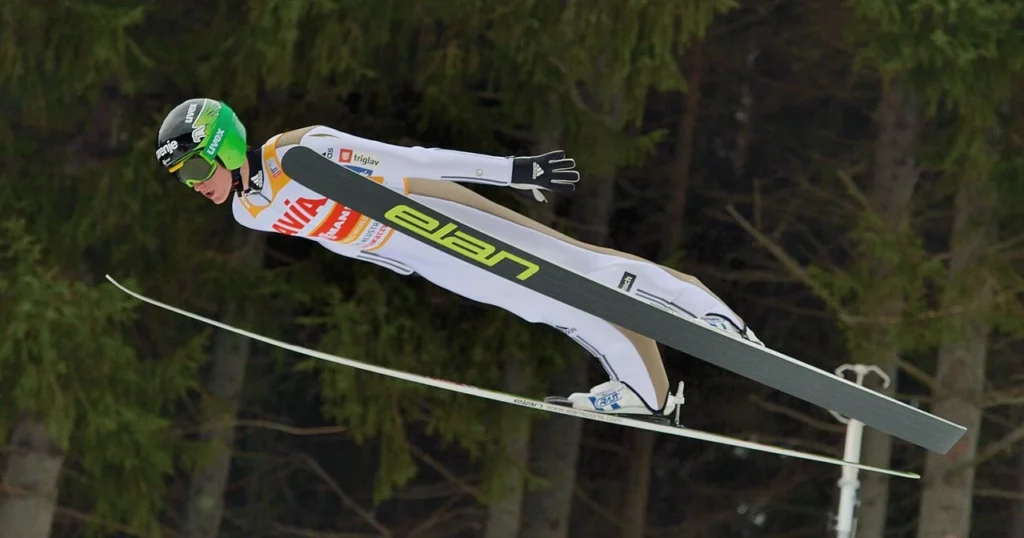

Have you ever watched a ski jumper launch off a towering ramp and wondered whether gravity somehow forgot to do its job?
For a few breathtaking seconds, these athletes appear to float through the sky. They glide hundreds of feet above the snow, maintaining astonishing control and balance before landing smoothly on a steep slope. To spectators, it can seem almost impossible. Yet behind every successful jump lies a fascinating combination of physics, aerodynamics, biomechanics, and years of intense training.
One question often comes up among sports fans and curious viewers alike: how is it possible for ski jumpers to stay in the air so long and how do they train for that? The answer involves much more than courage and speed. Ski jumpers use scientific principles to maximize lift, reduce drag, and maintain stability while airborne.
In this article, we’ll explore the remarkable science behind ski jumping, examine the techniques that keep athletes aloft, and reveal the rigorous training methods that help them achieve such incredible flights.
Understanding Ski Jumping: More Than Just a Big Leap
At first glance, ski jumping may seem straightforward. An athlete races down a ramp, launches into the air, and lands as far away as possible.
However, the sport is far more complex.
Modern ski jumping combines:
- Aerodynamics
- Physics
- Body positioning
- Balance
- Strength training
- Mental preparation
- Precision timing
- Weather analysis
Every movement matters. Even a slight adjustment in body angle can significantly impact flight distance.
When people ask how is it possible for ski jumpers to stay in the air so long and how do they train for that?, the first thing to understand is that ski jumpers are not truly “flying” like airplanes. Instead, they use airflow and body positioning to generate enough lift to delay their descent.
The Physics Behind Long Ski Jumps
Gravity Is Always Working
Gravity continuously pulls ski jumpers toward the ground.
The challenge is not to overcome gravity completely but to slow its effect.
Athletes achieve this by maximizing aerodynamic lift while minimizing air resistance.
Lift Creates the Magic
Lift is the upward force generated when air moves around an object.
In ski jumping:
- The jumper’s body acts like a wing.
- The skis function as aerodynamic surfaces.
- Airflow creates pressure differences.
- These pressure differences generate lift.
The more lift produced, the longer the athlete remains airborne.
This is one of the main reasons how is it possible for ski jumpers to stay in the air so long and how do they train for that? is such an interesting question. The answer lies largely in understanding lift generation.
Speed Is Essential
Without speed, lift would be impossible.
Before takeoff, ski jumpers accelerate down an in-run track at speeds that often exceed 90 km/h (56 mph). Elite athletes may reach speeds approaching 100 km/h depending on hill size and conditions.
This speed provides the airflow necessary for sustained flight.
The Revolutionary V-Style Technique
A Game-Changer in Ski Jumping
Before the late 1980s, jumpers kept their skis parallel.
Then athletes began experimenting with a V-shaped ski position.
The result was revolutionary.
The V-style:
- Increases surface area exposed to airflow
- Generates more lift
- Improves flight stability
- Extends jump distance
Today, virtually every elite ski jumper uses this technique.
Why the V-Style Works
When skis form a V shape:
- Air flows more efficiently around the athlete.
- Pressure differences become greater.
- Lift increases substantially.
Research has shown that the V-style can improve flight distance by more than 10% compared with traditional parallel skiing techniques.
This innovation significantly changed the answer to how is it possible for ski jumpers to stay in the air so long and how do they train for that?
Aerodynamics: Turning the Body Into a Wing
Body Position Is Everything
Elite ski jumpers spend years perfecting body posture.
During flight, they maintain:
- A forward lean
- Flat back alignment
- Low drag profile
- Stable center of gravity
The body essentially becomes part of the aerodynamic system.
Minimizing Air Resistance
Air resistance, also known as drag, slows movement.
Athletes reduce drag by:
- Keeping their torso streamlined
- Holding arms close to the body
- Maintaining optimal ski angles
- Wearing specialized suits
Even small increases in drag can cost valuable meters.
Flight Stability
Remaining stable in the air is incredibly difficult.
Athletes constantly make micro-adjustments using:
- Core muscles
- Hip positioning
- Leg control
- Ankle movements
These adjustments help maintain balance throughout the flight phase.
How Ski Jumping Hills Are Designed
The Shape Matters
Ski jumping hills are carefully engineered.
Design features include:
| Feature | Purpose |
|---|---|
| In-run Ramp | Generates speed |
| Takeoff Table | Provides launch angle |
| Landing Slope | Matches flight trajectory |
| Outrun Area | Allows safe stopping |
The landing hill follows a steep downward angle.
This design helps athletes appear airborne longer because the ground falls away beneath them.
Optimizing Flight Distance
Engineers use computer simulations and wind studies to create hills that maximize both safety and performance.
Without these specialized hill designs, modern ski jumping distances would be impossible.
Weather Plays a Huge Role
Wind Can Help or Hurt
Wind conditions dramatically influence performance.
Helpful conditions:
- Gentle headwinds
- Stable airflow
- Consistent atmospheric conditions
Problematic conditions:
- Strong crosswinds
- Turbulence
- Sudden gusts
A modest headwind can increase lift and extend flight duration significantly.
Temperature and Air Density
Cold air is denser than warm air.
Denser air creates:
- Better lift generation
- More aerodynamic support
- Improved flight conditions
This is another reason ski jumping competitions often produce impressive results during colder weather.
The Takeoff: The Most Critical Moment
Timing Must Be Perfect
A successful jump depends heavily on takeoff execution.
Athletes must:
- Maintain balance during descent.
- Reach maximum speed.
- Explode upward at precisely the right moment.
- Transition smoothly into flight position.
Mistiming the takeoff by fractions of a second can reduce distance dramatically.
Explosive Power
Takeoff requires:
- Fast-twitch muscle fibers
- Leg strength
- Coordination
- Neuromuscular efficiency
The movement lasts only an instant, but it determines the entire flight.
How Do Ski Jumpers Train for Long Flights?
Now we arrive at the second half of the question: how is it possible for ski jumpers to stay in the air so long and how do they train for that?
The answer involves a surprisingly comprehensive training program.
Strength Training
Jumpers need exceptional lower-body power.
Common exercises include:
- Squats
- Deadlifts
- Lunges
- Step-ups
- Power cleans
These exercises develop explosive force for takeoff.
Plyometric Training
Plyometrics improve jumping ability.
Examples include:
- Box jumps
- Depth jumps
- Bounding drills
- Hurdle hops
- Single-leg jumps
These movements train muscles to generate force quickly.
Core Stability Training
Core strength is essential for flight control.
Athletes frequently perform:
- Planks
- Hanging leg raises
- Russian twists
- Stability ball exercises
- Anti-rotation drills
A strong core helps maintain aerodynamic positioning.
Balance Training: A Hidden Secret
Extraordinary Balance Requirements
Ski jumpers must control their bodies while traveling at high speed.
Balance exercises often include:
- Balance boards
- Slacklines
- Stability platforms
- Single-leg drills
- Bosu ball workouts
Improved balance translates directly into better flight control.
Neuromuscular Coordination
Athletes train their nervous systems to react instantly.
This coordination allows tiny corrections during flight without disrupting aerodynamics.
Summer Training Is Surprisingly Important
Ski Jumpers Train Year-Round
Many people assume ski jumpers train only during winter.
In reality, elite competitors train throughout the year.
Summer facilities use:
- Plastic-covered ramps
- Synthetic landing surfaces
- Specialized water systems
This allows athletes to practice technique even when snow is absent.
Video Analysis
Modern coaching relies heavily on technology.
Tools include:
- High-speed cameras
- Motion tracking
- Biomechanical analysis
- Flight simulations
- Performance software
Every jump can be analyzed frame by frame.
Mental Training for Elite Performance
Managing Fear
Launching off a massive hill requires tremendous confidence.
Athletes use:
- Visualization techniques
- Breathing exercises
- Focus drills
- Sports psychology sessions
Mental preparation is just as important as physical training.
Building Consistency
Elite performers repeat the same movements thousands of times.
This repetition creates automatic execution under pressure.
Consistency often separates champions from average competitors.
Equipment Makes a Difference
Ski Design
Modern jumping skis are highly specialized.
Features include:
- Increased length
- Lightweight materials
- Aerodynamic construction
- Precise flexibility
Every design element contributes to lift generation.
Specialized Suits
Competition suits must meet strict regulations.
These suits help:
- Optimize airflow
- Reduce drag
- Improve stability
- Maintain aerodynamic efficiency
Equipment innovation continues to influence performance.
Common Misconceptions About Ski Jumping
They Are Not Flapping Through the Air
Some spectators assume jumpers actively create lift during flight.
In reality, lift comes primarily from airflow and body position.
Bigger Jumps Are Not Just About Courage
Bravery helps, but science matters more.
Distance depends on:
- Technique
- Speed
- Aerodynamics
- Strength
- Environmental conditions
Flight Is Highly Controlled
While it may look effortless, athletes constantly adjust posture and balance throughout the jump.
Key Factors That Keep Ski Jumpers Airborne
Here’s a quick summary of what allows these athletes to remain in the air for so long:
- High approach speed
- Aerodynamic body position
- V-style ski technique
- Lift generation
- Reduced drag
- Specialized equipment
- Optimal hill design
- Favorable wind conditions
- Strength and power training
- Exceptional balance and coordination
Together, these elements answer the question: how is it possible for ski jumpers to stay in the air so long and how do they train for that?
The Future of Ski Jumping Science
Sports scientists continue studying ways to improve performance safely.
Areas of research include:
- Advanced aerodynamics
- Motion capture technology
- Biomechanical optimization
- Training efficiency
- Injury prevention
- Equipment innovation
As technology evolves, ski jumpers may continue pushing the boundaries of human flight.
Conclusion
The next time you watch a ski jumper soaring gracefully above a snowy landscape, you’ll know there’s much more happening than meets the eye. The answer to how is it possible for ski jumpers to stay in the air so long and how do they train for that? lies in a remarkable combination of physics, aerodynamics, engineering, athletic skill, and relentless training.
From the V-style technique and aerodynamic body positioning to explosive strength training and mental preparation, every aspect of ski jumping is carefully refined. These athletes don’t simply jump—they master airflow, balance, speed, and precision to achieve flights that seem almost impossible.