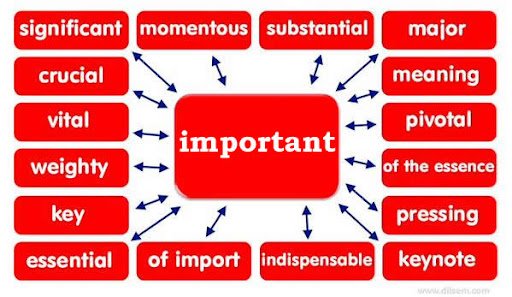

Choosing the right word can completely change how your writing sounds. One weak or repetitive term can make a sentence feel flat, while a stronger alternative instantly adds clarity, emotion, and authority. That’s exactly why learning every useful important synonym matters.
Think about how often the word “important” appears in essays, emails, blog posts, business reports, and conversations. Most people overuse it without realizing there are better, sharper, and more expressive options available. Repeating the same word again and again can make writing feel dull. However, using meaningful alternatives gives your sentences energy and personality.
Whether you are a student, blogger, marketer, business owner, or simply someone trying to improve communication skills, understanding synonym usage can dramatically strengthen your writing style.
In this guide, you’ll discover 15 excellent alternatives to the word “important,” along with examples, practical usage tips, and writing insights that make your content sound more natural and polished.
Why Using an Important Synonym Matters
Good writing is not about using complicated vocabulary. Instead, it’s about choosing precise words that fit the situation perfectly.
The word “important” is useful, but overusing it weakens readability. Readers notice repetition quickly. Moreover, search engines favor content that uses varied language naturally. That means adding an important synonym can improve both readability and SEO performance.
Here’s why synonyms matter:
- Improve vocabulary variety
- Make writing sound more professional
- Enhance sentence flow
- Reduce repetitive wording
- Increase reader engagement
- Add emotional depth
- Strengthen persuasive writing
- Improve academic and business communication
- Boost SEO relevance with semantic keywords
Writers who master word choice often sound more confident, credible, and memorable.
What Makes a Good Synonym?
Not every synonym works in every sentence. Context matters.
For example, “critical” sounds more urgent than “valuable.” Likewise, “essential” suggests necessity, while “influential” points toward impact or authority.
A strong important synonym should:
- Match the tone of the sentence
- Fit the audience
- Sound natural
- Improve clarity
- Avoid sounding forced
Now let’s explore the best alternatives.
15 Important Synonym Examples
1. Essential
“Essential” means absolutely necessary or required.
It works especially well in professional, academic, and instructional writing.
Example:
Regular exercise is essential for maintaining good health.
Best Used For:
- Health articles
- Academic writing
- Instructions
- Professional communication
“Essential” gives writing a stronger sense of necessity than simply saying “important.”
2. Crucial
“Crucial” suggests something extremely significant or decisive.
Example:
Communication is crucial in any successful relationship.
Why It Works:
This important synonym creates urgency and emphasis. It sounds more dynamic and persuasive.
3. Significant
“Significant” highlights meaning, influence, or impact.
Example:
The company experienced significant growth last year.
Best Situations:
- Research papers
- Business reports
- Analytical writing
- News articles
It’s one of the most versatile replacements for “important.”
4. Vital
“Vital” refers to something necessary for survival, success, or effectiveness.
Example:
Water is vital for human life.
Writing Benefit:
This word creates emotional strength and seriousness.
5. Critical
“Critical” often implies urgency or high importance.
Example:
Customer feedback is critical to improving services.
Tone:
Professional, direct, and authoritative.
Many business writers prefer this important synonym because it sounds decisive.
6. Valuable
“Valuable” focuses on usefulness or worth.
Example:
Her experience provided valuable insights.
Ideal For:
- Personal development content
- Workplace communication
- Educational articles
It adds warmth and positivity to writing.
7. Meaningful
“Meaningful” emphasizes emotional or personal significance.
Example:
They had a meaningful conversation about their future.
Why Readers Like It:
This word feels more human and emotional than “important.”
8. Influential
“Influential” refers to strong impact or authority.
Example:
She became one of the most influential leaders in the industry.
Best Usage:
- Leadership topics
- History articles
- Marketing content
- Social discussions
This important synonym works beautifully when discussing power or change.
9. Fundamental
“Fundamental” refers to something basic but necessary.
Example:
Trust is fundamental to healthy relationships.
Common Contexts:
- Education
- Science
- Philosophy
- Business strategy
It adds intellectual depth to writing.
10. Necessary
“Necessary” communicates obligation or requirement.
Example:
Sleep is necessary for mental performance.
Writing Advantage:
Simple, direct, and easy to understand.
11. Key
“Key” is short, modern, and highly effective.
Example:
Time management is a key skill for entrepreneurs.
Why Writers Love It:
It sounds conversational while remaining professional.
12. Prominent
“Prominent” refers to something well-known or highly noticeable.
Example:
Climate change is a prominent global issue.
Best For:
- Journalism
- Public discussions
- Social commentary
This word adds sophistication naturally.
13. Major
“Major” describes something large in impact or scale.
Example:
Technology plays a major role in modern education.
Benefit:
Clear, readable, and highly adaptable.
14. Consequential
“Consequential” suggests serious outcomes or effects.
Example:
The decision had consequential effects on the business.
Tone:
Formal and intelligent.
This important synonym is excellent for analytical writing.
15. Noteworthy
“Noteworthy” means deserving attention or recognition.
Example:
Her performance was particularly noteworthy.
Ideal For:
- Reviews
- Recommendations
- Professional evaluations
It sounds polished without feeling overly formal.
Quick Comparison Table of Important Synonyms
| Synonym | Tone | Best Use |
|---|---|---|
| Essential | Strong | Health, education |
| Crucial | Urgent | Persuasive writing |
| Significant | Professional | Reports, analysis |
| Vital | Serious | Health, survival |
| Critical | Authoritative | Business, strategy |
| Valuable | Positive | Advice, learning |
| Meaningful | Emotional | Personal writing |
| Influential | Powerful | Leadership topics |
| Fundamental | Intellectual | Academic content |
| Necessary | Simple | Everyday writing |
| Key | Conversational | Blogs, articles |
| Prominent | Sophisticated | News, commentary |
| Major | Flexible | General content |
| Consequential | Formal | Analysis |
| Noteworthy | Polished | Reviews |
How to Use Synonyms Naturally in Writing
Many writers make the mistake of forcing advanced vocabulary into sentences. However, natural writing always performs better than overly complicated language.
Here are practical tips for using an important synonym effectively.
Match the Tone
A casual blog post should sound different from a scientific paper.
For example:
- “Key” works well in blogs.
- “Fundamental” suits academic writing.
- “Critical” fits business communication.
Avoid Overcomplicating Sentences
Simple writing often feels more powerful.
Instead of:
“The consequential ramifications were exceedingly substantial.”
Write:
“The decision had major consequences.”
Clear writing wins every time.
Read Your Sentences Aloud
Natural writing sounds smooth when spoken. If a synonym feels awkward, replace it.
Don’t Replace Every “Important”
Sometimes “important” is still the best choice. Variety matters, but clarity matters more.
Common Mistakes When Using Synonyms
Even experienced writers misuse synonyms occasionally.
Using Words Outside Their Context
“Vital” and “valuable” are not interchangeable.
Incorrect:
Coffee is valuable for survival.
Correct:
Water is vital for survival.
Choosing Fancy Words Unnecessarily
Overly formal language can hurt readability.
Readers prefer:
“Key factors”
Instead of:
“Paramount determinants”
Ignoring Audience Understanding
Your audience should immediately understand your wording.
Professional communication should sound intelligent but accessible.
Best Situations to Replace “Important”
Using an important synonym works especially well in:
- Blog posts
- SEO articles
- Academic essays
- Cover letters
- Emails
- Social media captions
- Business presentations
- Product descriptions
- Research papers
- Marketing copy
Replacing repetitive words helps readers stay engaged longer.
SEO Benefits of Using Synonyms
Search engines have become smarter. Modern SEO is no longer about repeating one keyword endlessly.
Google now understands:
- semantic keywords
- contextual meaning
- related phrases
- user intent
That means using related vocabulary improves topical relevance naturally.
For example, this article includes semantic phrases like:
- meaningful words
- vocabulary alternatives
- writing enhancement
- word choice
- language improvement
- persuasive communication
- expressive writing
- professional vocabulary
- stronger wording
- readable content
- effective communication
- content optimization
- writing clarity
- sentence variation
- contextual language
- polished writing
- linguistic diversity
- compelling language
- natural tone
- academic vocabulary
These LSI keywords help search engines better understand the topic.
Examples of Important Synonyms in Real Sentences
Seeing words in context makes learning easier.
Business Writing
Strong leadership is crucial for company growth.
Academic Writing
Research plays a significant role in scientific advancement.
Everyday Communication
Family support is essential during difficult times.
Marketing Copy
Customer trust is vital to brand success.
Personal Development
Self-discipline is a key habit for achieving goals.
How Better Vocabulary Improves Writing Quality
Strong vocabulary doesn’t mean sounding smarter than everyone else. It means expressing ideas more clearly.
Writers with varied language:
- Hold attention longer
- Sound more confident
- Create stronger emotional impact
- Improve readability
- Communicate ideas efficiently
Even small word changes can transform average writing into compelling content.
For example:
Weak:
This is an important lesson.
Better:
This is a valuable lesson.
Even Better:
This is a life-changing lesson.
Specific wording creates stronger reactions.
Building a Stronger Vocabulary Daily
Improving vocabulary takes consistent practice.
Here are simple ways to grow naturally.
Read Different Types of Content
Books, blogs, magazines, and essays expose you to varied language patterns.
Keep a Synonym Journal
Write down new alternatives you discover.
Practice Rewriting Sentences
Take ordinary sentences and improve them using a different important synonym.
Use Vocabulary in Real Conversations
Words become natural when used regularly.
Avoid Memorizing Random Lists
Learn words through context instead.
Frequently Asked Questions
What is the best synonym for important?
The best synonym depends on context. “Essential,” “crucial,” and “significant” are among the strongest and most versatile options.
Is “critical” stronger than “important”?
Yes. “Critical” usually implies urgency or serious consequences.
Why should writers use synonyms?
Synonyms improve readability, reduce repetition, strengthen SEO, and make writing more engaging.
Can using synonyms improve SEO?
Absolutely. Search engines reward natural language variety and semantic relevance.
Which synonym sounds most professional?
“Significant,” “critical,” and “fundamental” often sound the most professional.
Final Thoughts on Choosing the Right Important Synonym
Words shape how readers feel, think, and respond. That’s why choosing the right important synonym can dramatically improve your writing quality.
Instead of repeating the same vocabulary over and over, experiment with alternatives that better fit the tone and meaning of your message. Sometimes “essential” creates urgency. Other times “meaningful” adds emotional depth. In business writing, “critical” may sound more persuasive, while “valuable” feels warmer and more relatable.