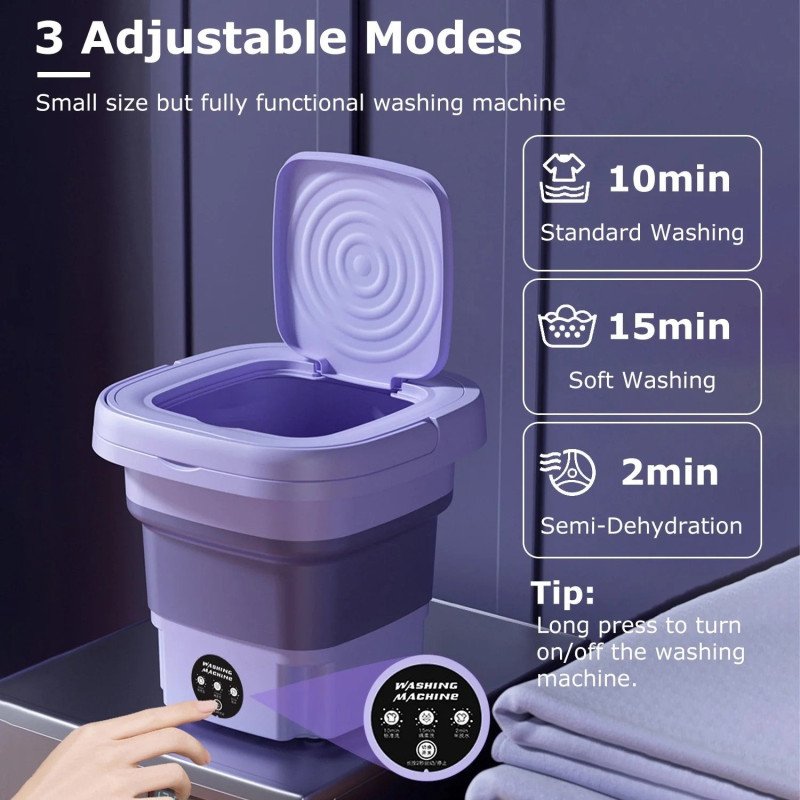

Laundry has never been easier than it is today. Whether you live in a small apartment, a college dorm, an RV, or simply want a second washer for convenience, a portable washing machine can completely change your routine. These compact appliances are no longer just basic alternatives to full-sized washers. In 2026, they are smarter, quieter, more energy-efficient, and surprisingly powerful.
The challenge, however, is choosing the right one. With hundreds of models available, different washing technologies, varying capacities, and dozens of extra features, it’s easy to feel overwhelmed. A machine that looks perfect online might not fit your space or handle your weekly laundry needs.
That’s why this guide exists.
We’ll walk through every important factor you should consider before buying a portable washing machine. By the end, you’ll know exactly which features matter, which marketing claims to ignore, and how to invest in a washer that fits your lifestyle and budget.
Why Portable Washing Machines Are More Popular Than Ever
Over the last few years, compact living has become increasingly common. Apartments are getting smaller, utility costs continue to rise, and many people are looking for appliances that save both money and space.
A modern portable washing machine offers several advantages over traditional washers:
- Easy to move around
- Ideal for apartments and rental homes
- Lower water consumption
- Reduced electricity usage
- Faster washing cycles
- No permanent installation required
- Great for RVs, cabins, dormitories, and tiny homes
Many newer models also include automatic water level detection, multiple wash programs, child safety locks, delay timers, and intelligent sensors that make laundry easier than ever.
Who Should Buy a Portable Washing Machine?
A compact washer isn’t only for people with limited space. It works well for many different lifestyles.
Apartment Residents
Many apartments don’t include laundry hookups. A portable washing machine lets you wash clothes without visiting a laundromat every week.
College Students
Dorm laundry rooms are often crowded and expensive. A compact washer can save both time and money throughout the semester.
RV Owners
Travelers appreciate lightweight appliances that consume minimal water and electricity.
Small Families
For couples or small households, a compact washer handles everyday laundry efficiently without wasting resources.
Seniors
Lightweight controls, simple operation, and smaller loads make portable machines easier to manage.
Vacation Homes
Instead of installing a permanent washing machine, a portable unit offers flexibility whenever needed.
Different Types of Portable Washing Machines
Understanding the different styles available is the first step toward making a smart purchase.
Fully Automatic Portable Washing Machines
These are the closest alternative to a traditional washer.
Features include:
- Automatic wash cycles
- Automatic rinse
- Automatic spin drying
- Multiple wash modes
- Digital control panels
Pros
- Convenient
- Minimal effort
- Better cleaning performance
- Higher efficiency
Cons
- Slightly more expensive
- Heavier than manual models
Semi-Automatic Portable Washing Machines
These models often feature separate washing and spin tubs.
Pros
- Lower purchase price
- Faster washing cycles
- Less electricity consumption
- Greater control over washing
Cons
- Requires manual transfer of clothes
- More user involvement
Mini Washing Machines
Mini washers are designed for:
- Baby clothes
- Underwear
- Socks
- Delicate fabrics
- Gym clothing
These are excellent for individuals who wash small loads frequently.
Capacity Matters More Than You Think
One of the biggest mistakes buyers make is choosing a machine that’s either too small or unnecessarily large.
Here’s a simple guide.
| Household Size | Recommended Capacity |
|---|---|
| One person | 5–8 pounds |
| Two people | 8–12 pounds |
| Small family | 12–18 pounds |
| Larger loads | 18 pounds or more |
Buying a machine with the right load capacity improves washing efficiency, reduces wear on clothing, and saves water.
Measure Your Space Before Buying
Never purchase a portable washing machine based only on appearance.
Instead, measure:
- Width
- Height
- Depth
- Door clearance
- Storage area
- Sink location
- Water hose length
Also check whether the machine needs enough room for ventilation and easy movement.
If you plan to roll it into a closet after each wash, don’t forget to account for the wheels and handle.
Pay Attention to Washing Programs
Modern compact washers include a surprising number of wash cycles.
Look for options such as:
- Quick Wash
- Heavy Duty
- Delicate
- Cotton
- Eco Wash
- Baby Care
- Bedding
- Jeans
- Normal Cycle
- Rinse and Spin
- Spin Only
- Soak
- Mixed Fabric
Having multiple washing modes means your clothes receive better care while improving cleaning performance.
Energy Efficiency Can Save Hundreds of Dollars
Although portable machines already consume less electricity than traditional washers, efficiency still varies.
Look for features such as:
- Low power consumption
- Eco mode
- Automatic load sensing
- Inverter motor
- Water level adjustment
- Energy-saving wash cycles
An energy-efficient portable washing machine not only reduces electricity bills but also minimizes environmental impact.
Water Usage Is Just as Important
Water costs continue to rise in many areas. Choosing a washer that uses less water can significantly reduce monthly expenses.
Features worth considering include:
- Adjustable water levels
- Smart fill technology
- Eco rinse
- High-efficiency drum design
- Automatic water sensors
These technologies ensure that every wash uses only the amount of water required for the load size.
Spin Speed Makes a Big Difference
People often focus only on washing performance and forget about drying efficiency.
Spin speed is measured in RPM (revolutions per minute).
Generally:
- 600 RPM – Basic drying
- 800 RPM – Good performance
- 1000 RPM – Excellent moisture removal
- 1200 RPM or higher – Faster drying times
A higher spin speed removes more water from clothing, reducing the time needed for air drying.
Noise Levels Matter in Small Spaces
If you live in a studio apartment or share a home with others, noise can become a deciding factor.
Modern portable washers often include:
- Brushless motors
- Anti-vibration systems
- Quiet operation technology
- Noise reduction insulation
- Stable balancing systems
A quieter portable washing machine makes it possible to run laundry early in the morning or late at night without disturbing others.
Build Quality Should Never Be Overlooked
A compact washer is an investment, so durability matters.
Pay attention to materials such as:
- Stainless steel drum
- Rust-resistant body
- Reinforced hoses
- Durable plastic cabinet
- Heavy-duty lid hinges
- Corrosion-resistant components
Quality construction helps extend the machine’s lifespan while reducing maintenance costs.
Essential Features Worth Paying For
Not every premium feature is necessary, but some genuinely improve everyday use.
Consider models with:
- LED display
- Digital controls
- Child safety lock
- Delay start timer
- Automatic shut-off
- Overflow protection
- Foam control
- Self-cleaning drum
- Transparent lid
- Soft-close cover
- Adjustable feet
- Mobility wheels
- Built-in drain pump
- Lint filter
- Smart diagnostics
These additions can make laundry day more convenient and improve the overall user experience.