
Have you ever looked at a water purifier, water quality report, or digital water tester and noticed the term TDS? If so, you’re not alone. Many people see this three-letter abbreviation but aren’t quite sure what it actually means or why it matters.
The truth is, TDS plays an important role in understanding water quality. Whether you’re drinking tap water, using a reverse osmosis system, buying bottled water, or maintaining an aquarium, knowing about TDS can help you make better decisions.
However, there’s also plenty of confusion surrounding the topic. Some people believe lower TDS always means better water, while others assume high TDS automatically makes water unsafe. Neither statement is entirely true.
In this beginner-friendly guide, we’ll explain everything you need to know about TDS in simple language. You’ll learn what it means, how it’s measured, what affects it, the ideal range for drinking water, and why it’s important for your health and everyday life.
What Is TDS?
TDS stands for Total Dissolved Solids. It refers to the total amount of dissolved substances present in water. These substances include minerals, salts, metals, and tiny organic materials that are invisible to the naked eye.
When rocks, soil, pipes, and natural minerals come into contact with water, they slowly dissolve. As a result, these dissolved particles become part of the water you drink every day.
Common dissolved solids include:
- Calcium
- Magnesium
- Sodium
- Potassium
- Chloride
- Sulfates
- Bicarbonates
- Iron
- Zinc
- Copper
- Silica
Some of these minerals are beneficial, while others may affect taste or indicate contamination when present in excessive amounts.
In simple words, TDS measures everything dissolved in water except the water molecules themselves.
What Does TDS Measure?
A TDS meter measures the electrical conductivity of water to estimate the concentration of dissolved solids.
The result is shown in:
- Parts per million (PPM)
- Milligrams per liter (mg/L)
Since 1 mg/L equals 1 PPM, both units represent the same concentration.
For example:
| TDS Reading (PPM) | Water Quality |
|---|---|
| 0–50 | Very low mineral content |
| 50–150 | Excellent drinking water |
| 150–300 | Good quality water |
| 300–500 | Acceptable |
| 500–900 | Poor taste may develop |
| Above 900 | Generally not recommended for drinking |
Why Is TDS Important?
Understanding TDS helps you evaluate water quality beyond what your eyes can see.
Here are several reasons why it matters.
Better Drinking Water
Water with balanced minerals usually tastes fresher and more pleasant than water with extremely low or extremely high mineral content.
Health Considerations
Some dissolved minerals like calcium and magnesium contribute to daily nutrition. On the other hand, excessive sodium or heavy metals can become a concern.
Appliance Protection
High TDS water often causes:
- Scale buildup
- Mineral deposits
- Reduced efficiency
- Shorter appliance lifespan
Water heaters, coffee makers, kettles, washing machines, and dishwashers are especially vulnerable.
Water Purifier Performance
Many modern water purification systems display the TDS level so users know when filters need replacement.
What Causes High TDS?
Several natural and human-made factors influence TDS levels.
Natural Sources
Nature contributes minerals through:
- Limestone
- Granite
- Sandstone
- Underground aquifers
- Rivers
- Lakes
As water travels underground, it dissolves minerals naturally.
Human Activities
Human activities can significantly increase TDS.
Examples include:
- Industrial discharge
- Agricultural fertilizers
- Road salts
- Sewage leakage
- Chemical runoff
- Mining operations
- Corroded plumbing
These sources may introduce unwanted contaminants into groundwater and surface water.
Is High TDS Water Dangerous?
Not necessarily.
This is one of the biggest misconceptions.
A high TDS reading simply indicates more dissolved substances. It doesn’t reveal what those substances actually are.
For instance:
- High calcium may be perfectly safe.
- High magnesium is often beneficial.
- High sodium may not suit people on low-salt diets.
- Heavy metals require immediate attention.
Therefore, TDS alone cannot determine water safety.
For complete water analysis, additional laboratory testing is necessary.
Is Low TDS Better?
Again, not always.
Water with extremely low TDS lacks many naturally occurring minerals.
This often happens after reverse osmosis purification.
Although RO water removes contaminants effectively, it also removes beneficial minerals.
Very low mineral water may:
- Taste flat
- Feel less refreshing
- Lack essential minerals
Many modern RO systems include a mineral cartridge to restore healthy minerals after filtration.
Ideal TDS Level for Drinking Water
Health organizations generally consider a moderate TDS level ideal.
Here’s a practical guide.
| TDS Level | Quality |
| Below 50 | Very low minerals |
| 50–150 | Excellent |
| 150–300 | Ideal |
| 300–500 | Acceptable |
| Above 500 | May affect taste |
| Above 1000 | Usually unsuitable |
Remember, acceptable limits vary by country and local regulations.
How Is TDS Measured?
Measuring TDS is surprisingly simple.
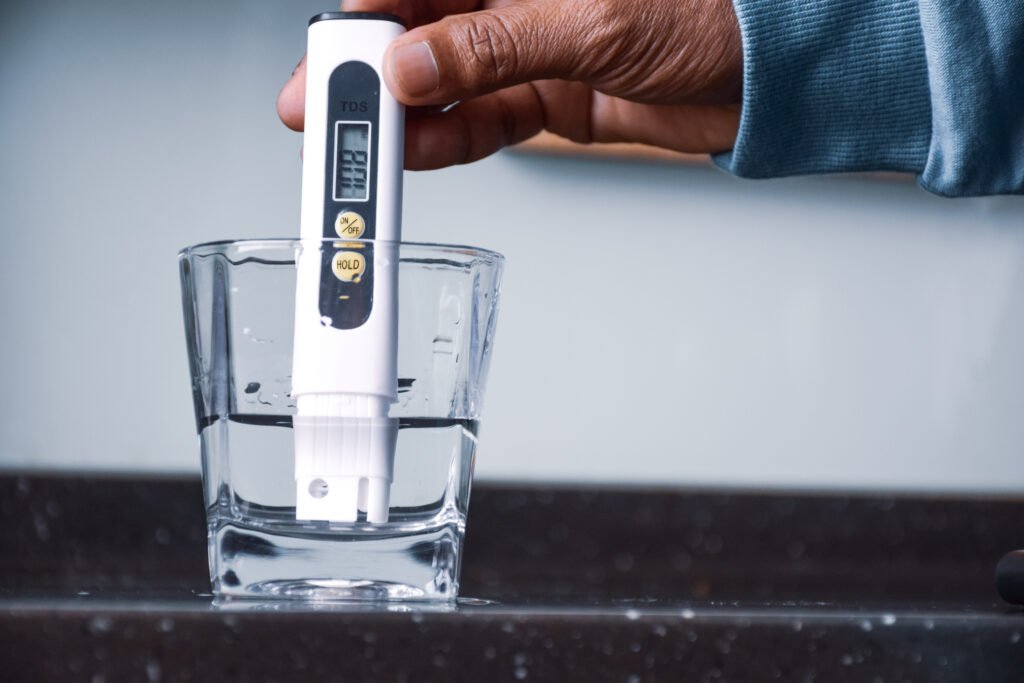
Most households use a digital TDS meter.
The process takes less than one minute.
Steps
- Fill a clean glass with water.
- Turn on the meter.
- Dip the sensor into the water.
- Wait a few seconds.
- Read the displayed value.
These portable devices are affordable, accurate for everyday use, and require very little maintenance.
TDS vs Water Hardness
Many people confuse TDS with water hardness.
Although related, they are different.
| TDS | Water Hardness |
| Measures all dissolved solids | Measures calcium and magnesium only |
| Includes salts, metals, and minerals | Includes hardness minerals |
| Expressed in PPM | Often expressed in PPM or grains per gallon |
Hard water contributes to TDS, but TDS includes much more than hardness alone.
Does Boiling Reduce TDS?
No.
Boiling water kills bacteria and viruses.
However, it does not remove dissolved solids.
In fact, boiling may slightly increase TDS because some water evaporates while minerals remain behind.
To reduce TDS, specialized filtration systems are needed.
How to Reduce TDS
If your water has excessively high TDS, several treatment methods are available.
Reverse Osmosis (RO)
This is the most effective household solution.
RO membranes remove:
- Dissolved salts
- Heavy metals
- Fluoride
- Nitrates
- Many contaminants
Distillation
Water is boiled, condensed, and collected separately, leaving most dissolved solids behind.
Deionization
Ion exchange resins remove charged minerals.
This method is widely used in laboratories and industrial applications.
Common Sources of TDS in Drinking Water
The dissolved solids found in water may come from:
- Natural minerals
- Underground rocks
- Municipal water treatment
- Agricultural runoff
- Industrial waste
- Water distribution pipes
- Household plumbing
- Groundwater
- Surface water
- Environmental pollution
Understanding these sources helps identify potential water quality concerns.
Benefits of Proper TDS Levels
Balanced TDS offers several advantages.
Better Taste
Minerals contribute to a pleasant and refreshing flavor.
Healthy Mineral Intake
Water naturally provides:
- Calcium
- Magnesium
- Potassium
These support normal body functions.
Improved Hydration
Many people prefer mineral-balanced water because it feels more satisfying to drink.
Longer Appliance Life
Moderate mineral content reduces excessive scaling while maintaining water quality.
Common Myths About TDS
Myth 1: Lower TDS Is Always Better
False.
Extremely low mineral content isn’t necessarily healthier.
Myth 2: High TDS Means Unsafe Water
Not always.
Safe minerals can also increase TDS.
Myth 3: TDS Meters Detect Bacteria
Incorrect.
A TDS meter measures dissolved solids—not bacteria, viruses, or microorganisms.
Myth 4: Clear Water Has Low TDS
Appearance alone cannot determine dissolved mineral content.
Only proper testing provides accurate results.
Where Is TDS Commonly Measured?
Many industries monitor TDS regularly.
These include:
- Drinking water treatment
- Reverse osmosis systems
- Water purification plants
- Aquariums
- Hydroponics
- Agriculture
- Food processing
- Beverage manufacturing
- Swimming pools
- Pharmaceutical production
- Laboratories
Maintaining appropriate TDS levels is essential for quality control in these environments.
Tips for Maintaining Good Water Quality
Keeping water healthy isn’t difficult if you follow a few simple habits.
- Test your water periodically.
- Replace water filters on schedule.
- Clean storage tanks regularly.
- Inspect plumbing for corrosion.
- Use certified purification systems.
- Monitor RO system performance.
- Avoid storing water in contaminated containers.
- Request a complete water quality analysis if TDS changes suddenly.
Preventive maintenance often saves money and ensures consistently safe drinking water.
Final Thoughts
Understanding TDS is one of the easiest ways to become more informed about the water you use every day. While the number itself doesn’t tell the whole story, it offers valuable insight into the amount of dissolved minerals and substances present in your water.