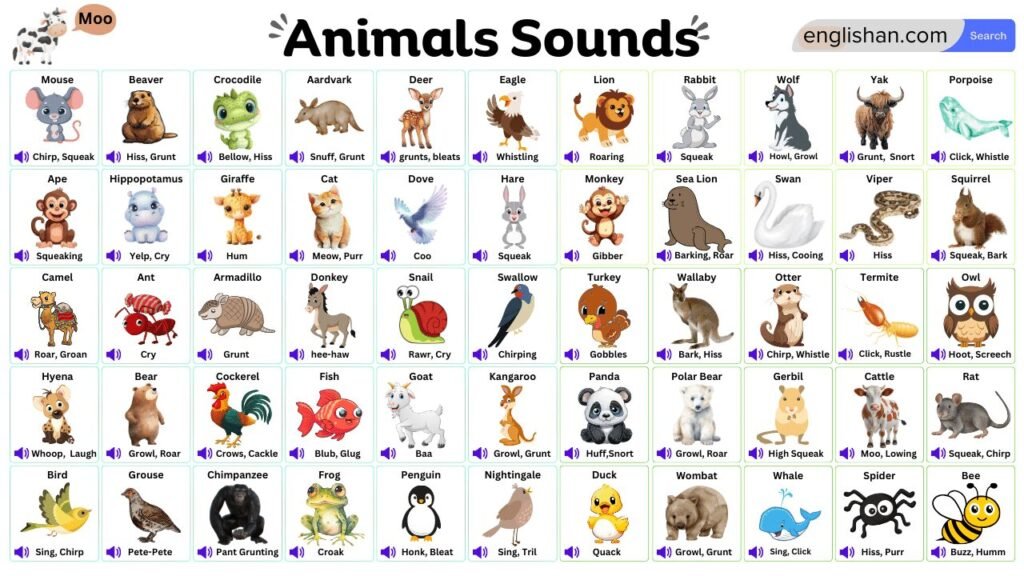

Learning about the natural world has a strange kind of magic to it. The rustle of leaves, the distant call of a bird, or even the bark of a dog can tell a story if you know how to listen. That is exactly what this Ultimate Guide to Animal Sounds for Beginners is all about—helping you decode those sounds in a way that feels simple, natural, and genuinely enjoyable.
If you’ve ever wondered why a cow moos differently from a goat bleating, or how birds seem to “talk” to each other at sunrise, you’re in the right place. This guide will slowly walk you through everything without overwhelming jargon or complicated theory.
The truth is, understanding animal sounds is less about memorization and more about observation. And once you start paying attention, you’ll notice patterns everywhere—from farmyards to forests.
What Are Animal Sounds and Why Do They Matter?
At its core, animal sounds are a form of animal communication. Just like humans use language, animals rely on vocalizations, body signals, and even vibrations to express emotions and needs.
In this Ultimate Guide to Animal Sounds for Beginners, we’ll explore how these sounds work in everyday life.
Animals use sound for many reasons:
- Finding food and water
- Warning others of danger
- Attracting mates
- Marking territory
- Social bonding within groups
When you begin to understand wildlife sounds, you are essentially learning a hidden language of nature. This includes everything from bird calls, dog barking, cat meowing, and lion roaring, to subtle insect buzzing in the background of a quiet evening.
Why Beginners Should Learn Animal Sounds
The Ultimate Guide to Animal Sounds for Beginners is not just for nature enthusiasts. It is for anyone who wants to connect more deeply with the environment.
Here’s why it matters:
- Improves listening skills and attention to detail
- Enhances understanding of animal behavior
- Helps in wildlife identification during outdoor trips
- Builds awareness of nature sounds and ecosystems
- Useful for students studying zoology basics or wildlife education
Once you start recognizing these sounds, even a simple walk becomes a richer experience.
Categories of Animal Sounds
To make this Ultimate Guide to Animal Sounds for Beginners easier, let’s break sounds into categories.
Mammals and Their Vocalizations
Mammals are some of the most expressive animals when it comes to sound.
Common examples include:
- Dog barking, whining, growling
- Cat meowing, purring, hissing
- Cow mooing, calf bleating
- Horse neighing, snorting
- Lion roaring
- Elephant trumpeting
- Goat bleating
- Wolf howling
These sounds often carry emotional meaning like fear, excitement, or communication within a herd.
Birds and Their Songs
Birds are the natural musicians of the animal kingdom. Their bird songs and bird calls are often used for:
- Mating signals
- Territory marking
- Warning alarms
Examples:
- Sparrow chirping
- Crow cawing
- Peacock calling
- Duck quacking
- Owl hooting
- Rooster crowing
Bird sounds are often studied in audio recognition and sound classification because of their complexity.
Reptiles and Amphibians
Though quieter than mammals and birds, they still contribute to wildlife sounds.
Examples include:
- Frog croaking
- Snake hissing
- Lizard chirruping
- Toad peeping
These sounds often appear in forest sounds, jungle sounds, and wetland environments.
Insects and Small Creatures
Insects may be small, but their sound impact is huge.
Common sounds include:
- Bee buzzing
- Cricket chirping
- Mosquito whining
- Grasshopper clicking
These are often part of nature sounds that people associate with summer evenings.
Common Animal Sounds Table for Beginners
This table from the Ultimate Guide to Animal Sounds for Beginners makes recognition easier:
| Animal | Sound | Context / Meaning |
|---|---|---|
| Dog | Barking | Warning, excitement |
| Cat | Meowing | Attention-seeking |
| Cow | Mooing | Communication, distress |
| Horse | Neighing | Social bonding |
| Lion | Roaring | Territorial signal |
| Bird | Chirping | Communication, mating |
| Frog | Croaking | Mating call |
| Bee | Buzzing | Flight activity |
| Duck | Quacking | Social interaction |
| Owl | Hooting | Night communication |
How Beginners Can Learn Animal Sounds Easily
This Ultimate Guide to Animal Sounds for Beginners wouldn’t be complete without practical tips.
Start with Familiar Animals
Begin with pets like dogs and cats. Their sounds are easier to recognize and remember.
Use Audio Resources
Listening to sound patterns, acoustic signals, and audio recognition clips helps train your ear.
Observe in Real Life
Visit farms, parks, or forests. Real-life exposure improves sound identification skills faster than theory alone.
Group Sounds by Environment
- Farm animals: cows, goats, chickens
- Forest animals: deer, wolves, birds
- Ocean animals: whales, dolphins
- Desert wildlife: foxes, snakes
Repeat and Practice
Repetition builds familiarity. The more you hear animal vocalizations, the more natural it becomes.
Understanding the Science Behind Animal Sounds
In deeper studies of the Ultimate Guide to Animal Sounds for Beginners, we explore how sound works scientifically.
Key concepts include:
- Sound frequency – how high or low a sound is
- Pitch and tone – emotional quality of sound
- Echolocation – used by bats and dolphins
- Auditory cues – signals used in communication
- Sound rhythm – pattern of repeated sounds
Animals often rely on these elements for survival, mating, and navigation.
Common Mistakes Beginners Make
Even in the Ultimate Guide to Animal Sounds for Beginners, learners sometimes struggle.
Avoid these mistakes:
- Confusing similar sounds (like crow vs raven cawing)
- Ignoring environmental context
- Trying to memorize instead of listening
- Overthinking natural sounds
- Not practicing regularly
Learning should feel natural, not forced.
The Role of Animal Sounds in Nature
Animal sounds are not random. They create balance in ecosystems.
They help in:
- Maintaining social behavior in groups
- Signaling alarm calls during danger
- Supporting territorial calls
- Encouraging mating communication
- Strengthening herd survival strategies
Without these sounds, nature would lose its rhythm.
Beginner-Friendly Tips for Mastering Animal Sounds
Here are some final practical insights from this Ultimate Guide to Animal Sounds for Beginners:
- Spend time outdoors daily
- Focus on one sound at a time
- Record and replay sounds for practice
- Learn by comparing similar animals
- Stay patient—learning takes time
Over time, your brain naturally starts recognizing patterns in sound perception and wildlife education improves significantly.
Conclusion
The journey through this Ultimate Guide to Animal Sounds for Beginners is more than just learning noises—it’s about reconnecting with nature in its purest form. From the soft chirping of birds at dawn to the distant roar of wild animals, every sound has meaning.