
Have you ever looked at a weather forecast from another country and wondered why the temperature looked completely different? Maybe a recipe asked you to bake something at a temperature you didn’t recognize, or you were reading a science book that used a different temperature scale. If so, you’re not alone.
Learning how to convert celsius to fahrenheit is one of those practical skills that comes in handy more often than you might expect. The good news is that it isn’t complicated. Once you understand the simple formula and practice it a few times, you’ll be able to convert temperatures confidently without feeling overwhelmed.
In this guide, we’ll break everything down into three easy steps. We’ll also cover why the two temperature scales exist, where they’re commonly used, common mistakes to avoid, practical examples, and a handy conversion chart you can refer to whenever needed.
Whether you’re a student, traveler, home cook, weather enthusiast, or simply curious about temperature conversion, this guide has you covered.
Understanding Celsius and Fahrenheit
Before learning how to convert celsius to fahrenheit, it’s helpful to understand what these temperature scales actually measure.
What Is Celsius?
The Celsius scale is used by most countries around the world. It is part of the metric system and is widely used in:
- Weather forecasts
- Science laboratories
- Schools
- Medical thermometers
- Cooking instructions
- Engineering
On the Celsius scale:
- Water freezes at 0°C
- Water boils at 100°C
Because of its straightforward structure, Celsius is considered simple and logical.
What Is Fahrenheit?
Fahrenheit is primarily used in the United States and a few other regions.
On the Fahrenheit scale:
- Water freezes at 32°F
- Water boils at 212°F
Since the Fahrenheit scale has more degrees between freezing and boiling, it provides slightly more precision for everyday weather measurements.
Why Learn Celsius to Fahrenheit Conversion?
Knowing how to convert celsius to fahrenheit can save time and prevent confusion in many situations.
Here are a few examples:
- Reading international weather reports
- Traveling abroad
- Understanding scientific experiments
- Following recipes from another country
- Comparing climate data
- Learning physics or chemistry
- Using digital thermometers
- Understanding medical temperatures
It’s a useful life skill that works across many everyday situations.
How to Convert Celsius to Fahrenheit in 3 Simple Steps
Here’s the easiest method.
Step 1: Start With the Celsius Temperature
First, write down the Celsius value you want to convert.
Example:
25°C
This is your starting point.
Step 2: Multiply by 9
Multiply the Celsius number by 9.
Example:
25 × 9 = 225
Don’t worry if the number seems large. You’ll divide it in the next step.
Step 3: Divide by 5 and Add 32
Now divide the result by 5.
225 ÷ 5 = 45
Then add 32.
45 + 32 = 77°F
Therefore,
25°C = 77°F
That’s it.
Every celsius to fahrenheit conversion follows these same three steps.
The Celsius to Fahrenheit Formula
The mathematical formula is:
F = (C × 9 ÷ 5) + 32
Where:
- F = Fahrenheit
- C = Celsius
Simply replace the Celsius value with your number.
For example:
- 30°C
30 × 9 = 270
270 ÷ 5 = 54
54 + 32 = 86°F
So,
30°C = 86°F
Once you’ve used the formula several times, it becomes second nature.
Easy Examples of Celsius to Fahrenheit Conversion
Here are some common examples.
| Celsius | Fahrenheit |
|---|---|
| 0°C | 32°F |
| 5°C | 41°F |
| 10°C | 50°F |
| 15°C | 59°F |
| 20°C | 68°F |
| 25°C | 77°F |
| 30°C | 86°F |
| 35°C | 95°F |
| 40°C | 104°F |
| 100°C | 212°F |
This chart makes celsius to fahrenheit conversion much quicker for everyday use.
Quick Trick for Mental Conversion
Sometimes you don’t need an exact answer.
A simple estimate is:
- Double the Celsius temperature.
- Add 30.
For example:
20°C
20 × 2 = 40
40 + 30 = 70°F
The actual answer is 68°F.
It’s close enough for weather conversations.
However, always use the official formula for accurate measurements.
Common Celsius to Fahrenheit Conversions
These temperatures appear frequently in daily life.
| Celsius | Fahrenheit | Typical Situation |
| -10°C | 14°F | Snowy winter day |
| 0°C | 32°F | Water freezes |
| 10°C | 50°F | Cool weather |
| 20°C | 68°F | Comfortable room |
| 25°C | 77°F | Pleasant afternoon |
| 30°C | 86°F | Hot summer day |
| 37°C | 98.6°F | Average human body temperature |
| 40°C | 104°F | Very hot weather |
| 100°C | 212°F | Water boils |
Common Mistakes to Avoid
Learning celsius to fahrenheit is simple, but beginners sometimes make small mistakes.
Forgetting to Add 32
Many people stop after multiplying and dividing.
Remember, adding 32 is essential.
Dividing Before Multiplying
Always multiply by 9 first.
Then divide by 5.
Mixing Up the Formula
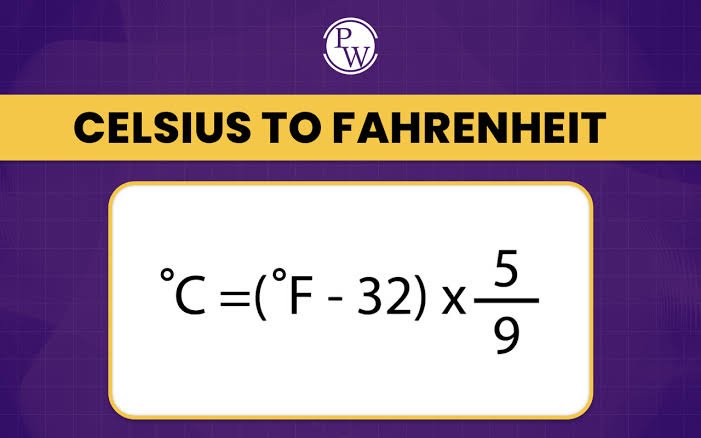
The Fahrenheit to Celsius formula is different.
Be sure you’re using the correct conversion direction.
Rounding Too Early
Avoid rounding numbers until the final answer.
You’ll get more accurate results.
Where Celsius to Fahrenheit Conversion Is Used
Temperature conversion appears in many areas of daily life.
Weather
International forecasts often switch between Celsius and Fahrenheit.
Cooking
Recipes from different countries may use different temperature units.
Medicine
Body temperature can be shown in either scale.
Education
Science classes frequently teach temperature conversion.
Engineering
Many engineering projects require precise temperature calculations.
Aviation
Pilots often encounter both temperature scales.
Travel
Visiting another country becomes easier when you understand both systems.
Why Different Countries Use Different Temperature Scales
Most countries adopted Celsius because it fits naturally with the metric system.
The United States continues using Fahrenheit for everyday weather and household applications.
Neither system is wrong.
They’re simply different ways of measuring the same thing.
Knowing both makes international communication much easier.
Practical Real-Life Examples
Example 1
A weather app shows:
18°C
Formula:
18 × 9 = 162
162 ÷ 5 = 32.4
32.4 + 32 = 64.4°F
Answer:
64.4°F
Example 2
A recipe recommends:
200°C
Calculation:
200 × 9 = 1800
1800 ÷ 5 = 360
360 + 32 = 392°F
Your oven should be set to 392°F.
Example 3
Swimming pool temperature:
28°C
28 × 9 = 252
252 ÷ 5 = 50.4
50.4 + 32 = 82.4°F
Perfect swimming weather.
Tips for Remembering the Formula
If you struggle to memorize formulas, try these ideas.
- Practice every day.
- Convert today’s weather.
- Memorize freezing and boiling points.
- Write the formula on a sticky note.
- Use flashcards.
- Solve five practice questions daily.
- Compare Celsius and Fahrenheit forecasts.
Regular practice builds confidence.
Practice Questions
Try solving these yourself.
- Convert 12°C.
- Convert 18°C.
- Convert 27°C.
- Convert 45°C.
- Convert 50°C.
Answers:
- 12°C = 53.6°F
- 18°C = 64.4°F
- 27°C = 80.6°F
- 45°C = 113°F
- 50°C = 122°F
Practicing regularly makes celsius to fahrenheit conversion much easier.
Benefits of Learning Temperature Conversion
Understanding celsius to fahrenheit offers several advantages.
- Better travel experiences
- Easier international communication
- Improved cooking accuracy
- Stronger science knowledge
- Better understanding of weather reports
- Useful for students and professionals
- Helpful during outdoor activities
- Improves mathematical confidence
- Makes reading global news easier
- Supports everyday problem-solving
Final Celsius to Fahrenheit Reference Chart
| Celsius | Fahrenheit |
| -20°C | -4°F |
| -10°C | 14°F |
| 0°C | 32°F |
| 5°C | 41°F |
| 10°C | 50°F |
| 15°C | 59°F |
| 20°C | 68°F |
| 25°C | 77°F |
| 30°C | 86°F |
| 35°C | 95°F |
| 40°C | 104°F |
| 50°C | 122°F |
| 75°C | 167°F |
| 100°C | 212°F |
Keep this chart nearby whenever you need a quick temperature conversion.
Conclusion
Learning how to convert celsius to fahrenheit is much easier than it first appears. By following three simple steps—multiply the Celsius temperature by 9, divide the result by 5, and then add 32—you can accurately convert any temperature in seconds. Whether you’re checking the weather before a trip, following an international recipe, studying science, or comparing climate data, this practical skill makes everyday tasks simpler and more enjoyable.