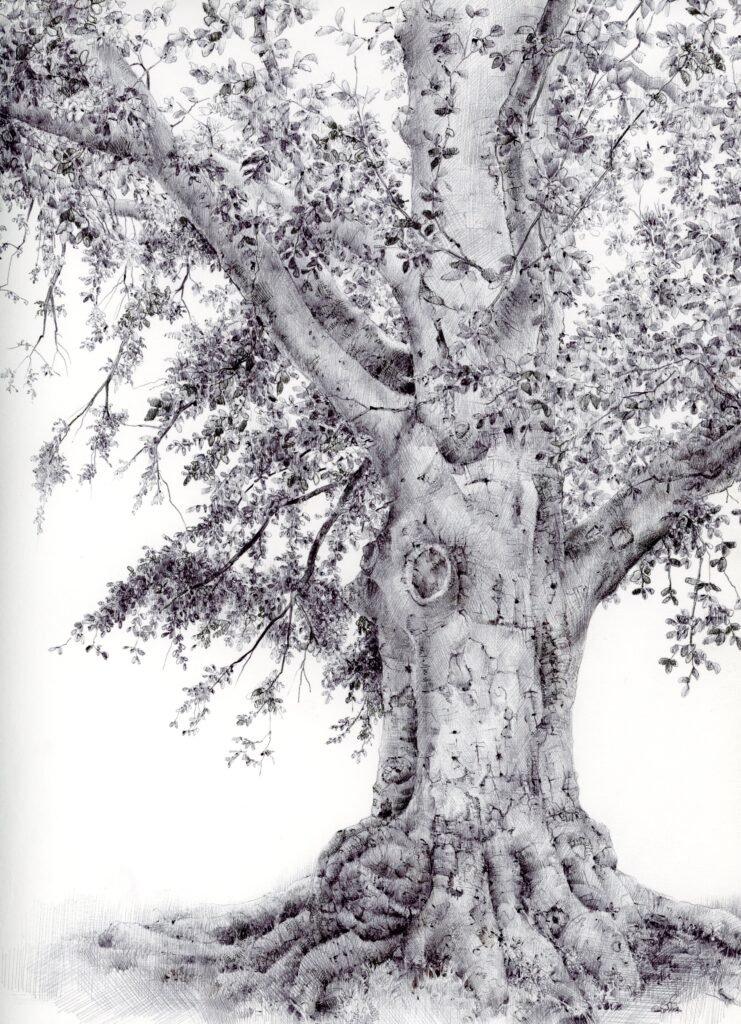

Trees are among the most beautiful subjects an artist can draw. They appear in landscapes, nature sketches, fantasy illustrations, architectural drawings, and even children’s artwork. Yet many beginners struggle with tree drawing because trees seem simple at first glance but contain countless details, textures, and natural variations.
The good news is that drawing trees is not about copying every leaf or branch. Instead, it is about understanding structure, shape, texture, light, and form. Once you learn these fundamentals, creating realistic or stylized trees becomes much easier.
Whether you’re a complete beginner holding a pencil for the first time or an experienced sketch artist looking to improve your nature drawings, this guide will walk you through the process step by step. By the end, you’ll understand how to create convincing trees that look alive, natural, and visually appealing.
Why Learning Tree Drawing Matters
Trees are essential elements in many forms of art. They help create depth, atmosphere, and realism in landscapes. Mastering tree drawing can significantly improve your overall drawing skills because it teaches:
- Observation techniques
- Organic forms and shapes
- Texture rendering
- Light and shadow principles
- Composition balance
- Perspective drawing
- Sketching confidence
Moreover, trees never look exactly alike. Every species has unique characteristics, making them excellent subjects for artistic practice.
Understanding the Basic Structure of a Tree
Before starting any tree drawing, it helps to understand how a tree is built.
A tree generally consists of:
| Part | Function in Drawing |
|---|---|
| Roots | Anchor the tree visually |
| Trunk | Main structural element |
| Branches | Create direction and movement |
| Twigs | Add realism and detail |
| Leaves | Build texture and volume |
| Crown/Canopy | Defines overall shape |
Think of a tree as a living structure. The trunk supports the branches, branches support smaller branches, and those support leaves.
When you understand this hierarchy, drawing becomes much more natural.
Essential Materials for Tree Drawing
You do not need expensive supplies to create beautiful tree sketches.
Basic Tools
- HB pencil
- 2B pencil
- 4B pencil
- Sketchbook
- Eraser
- Blending stump
- Sharpener
Optional Tools
- Charcoal pencils
- Colored pencils
- Ink pens
- Graphite sticks
- Watercolor paints
Many professional artists still create stunning tree drawing studies using only a simple pencil.
Step 1: Start with the Tree Trunk
The trunk serves as the foundation.
Avoid drawing perfectly straight lines. Real trees contain natural curves and imperfections.
Tips
- Draw two slightly uneven vertical lines.
- Make the base wider than the top.
- Add subtle bends and twists.
- Keep the edges irregular.
A common beginner mistake is making the trunk look like a telephone pole. Trees are organic and rarely symmetrical.
Step 2: Sketch the Main Branches
Once the trunk is established, add large branches.
Think of branches like arms extending outward.
Important Rule
Branches become thinner as they move away from the trunk.
Keep in mind:
- Branches split naturally.
- Avoid identical patterns.
- Let some branches overlap.
- Vary branch lengths.
This stage gives your tree drawing its character and personality.
Step 3: Create the Tree Canopy
The canopy represents the mass of leaves.
Instead of drawing every leaf individually, sketch the overall shape first.
Common Canopy Shapes
Round Trees
Examples include:
- Oak trees
- Maple trees
- Elm trees
Cone-Shaped Trees
Examples include:
- Pine trees
- Fir trees
- Spruce trees
Irregular Trees
Examples include:
- Old growth trees
- Windswept trees
- Fantasy trees
Use light sketch lines to outline the canopy.
Step 4: Add Secondary Branches
Now refine your structure.
Smaller branches grow from larger branches.
Observe how branches:
- Divide naturally
- Follow gravity
- Twist slightly
- Overlap one another
This stage transforms a simple sketch into a believable tree drawing.
Step 5: Draw Foliage Naturally
One of the biggest mistakes beginners make is drawing individual leaves everywhere.
Instead:
- Draw clusters of leaves
- Create masses of texture
- Focus on light and shadow
- Suggest details rather than copy them
Artists often use loose marks to imply foliage.
This technique saves time while improving realism.
Step 6: Add Bark Texture
Bark gives trees personality.
Different species have different bark textures.
Bark Characteristics
Smooth Bark
Examples:
- Birch
- Beech
Rough Bark
Examples:
- Oak
- Pine
Deeply Grooved Bark
Examples:
- Ancient trees
- Mature hardwoods
Use short lines, cracks, and irregular marks to create bark texture.
Avoid repetitive patterns.
Nature is wonderfully unpredictable.
Step 7: Apply Shading
Shading creates depth and dimension.
Without proper shading, your tree drawing may appear flat.
Identify the Light Source
Ask yourself:
Where is the sunlight coming from?
Once you decide:
- Darken shadow areas
- Leave highlights lighter
- Create smooth transitions
Areas Usually in Shadow
- Under leaf clusters
- Beneath large branches
- Inside the canopy
- One side of the trunk
Good shading transforms a simple sketch into a realistic artwork.
Step 8: Add Ground and Roots
A floating tree looks unnatural.
Anchor the tree to the ground.
Include
- Exposed roots
- Grass
- Soil texture
- Fallen leaves
- Small rocks
These elements strengthen the overall composition.
Common Types of Trees to Practice
Practicing different species improves observation skills.
Oak Tree Drawing
Characteristics:
- Thick trunk
- Wide canopy
- Strong branches
- Rough bark texture
Pine Tree Drawing
Characteristics:
- Tall structure
- Triangular shape
- Needle foliage
- Layered branches
Maple Tree Drawing
Characteristics:
- Rounded crown
- Dense leaf clusters
- Elegant branching patterns
Willow Tree Drawing
Characteristics:
- Hanging branches
- Flowing silhouette
- Graceful appearance
Each species presents unique artistic challenges.
Tree Drawing Techniques Used by Professional Artists
Professional illustrators use several methods to improve realism.
Gesture Sketching
Gesture drawing captures movement and energy.
Focus on:
- Flow
- Direction
- Overall shape
Rather than details.
Negative Space Observation
Look at spaces between branches.
These gaps often reveal structural accuracy better than the branches themselves.
Layering
Build your drawing gradually:
- Basic structure
- Branches
- Canopy
- Texture
- Shading
- Final details
Layering creates cleaner results.
How to Draw Realistic Trees
Realistic tree drawing depends on observation.
Study real trees whenever possible.
Notice:
- Branch growth patterns
- Trunk thickness
- Leaf distribution
- Light interaction
- Seasonal changes
Photography can help, but direct observation often reveals more subtle details.
Realism Tips
- Avoid symmetry
- Use varied line weight
- Create natural imperfections
- Add depth through shading
- Observe reference images carefully
Tree Drawing for Beginners
If you’re just starting, keep things simple.
Beginner Practice Routine
Day 1:
- Draw trunks only
Day 2:
- Practice branch structures
Day 3:
- Draw simple canopies
Day 4:
- Add shading
Day 5:
- Complete full tree sketches
Consistency matters more than perfection.
Even 15 minutes daily can produce remarkable improvement.
Mistakes to Avoid in Tree Drawing
Many artists repeat the same errors.
Drawing Symmetrical Trees
Nature rarely creates perfect symmetry.
Overdrawing Leaves
Too many individual leaves create clutter.
Ignoring Light Direction
Without a light source, the tree lacks realism.
Uniform Branch Thickness
Branches naturally taper.
Flat Shading
Use multiple values to create depth.
Avoiding these mistakes instantly improves your tree drawing skills.
Seasonal Tree Drawing Ideas
Different seasons offer unique artistic opportunities.
Spring Trees
Features:
- Fresh leaves
- Blossoms
- Light foliage
Summer Trees
Features:
- Dense canopy
- Rich textures
- Strong shadows
Autumn Trees
Features:
- Falling leaves
- Color variation
- Dynamic compositions
Winter Trees
Features:
- Bare branches
- Visible structure
- Dramatic silhouettes
Practicing seasonal trees broadens your artistic abilities.
Advanced Tree Drawing Techniques
Once you master fundamentals, experiment with advanced methods.
Atmospheric Perspective
Distant trees appear:
- Lighter
- Less detailed
- Lower in contrast
This technique creates landscape depth.
Cross-Hatching
Cross-hatching adds:
- Texture
- Shadow
- Visual interest
Stippling
Tiny dots can create detailed bark and foliage effects.
Mixed Media
Combine:
- Graphite
- Ink
- Watercolor
- Colored pencil
Mixed media produces striking results.
Final Thoughts on Mastering Tree Drawing
Mastering tree drawing is a journey rather than a destination. Every tree presents a new opportunity to study shape, texture, structure, and light. The more you observe nature, the more convincing your drawings become.
Remember that great artists did not learn overnight. They improved through consistent sketching, careful observation, and a willingness to experiment. Start with simple trunks and branches, gradually add foliage and shading, and practice different tree species whenever possible.